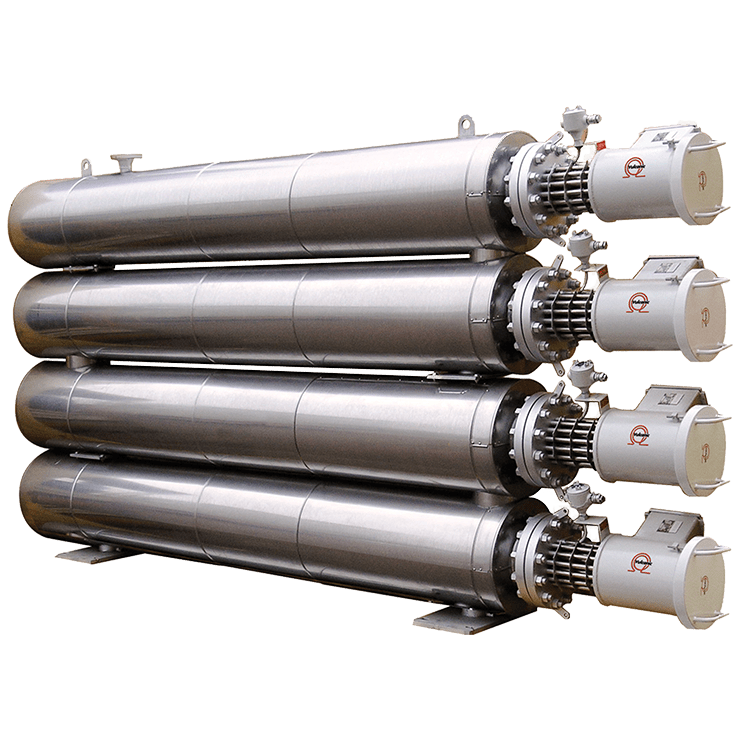
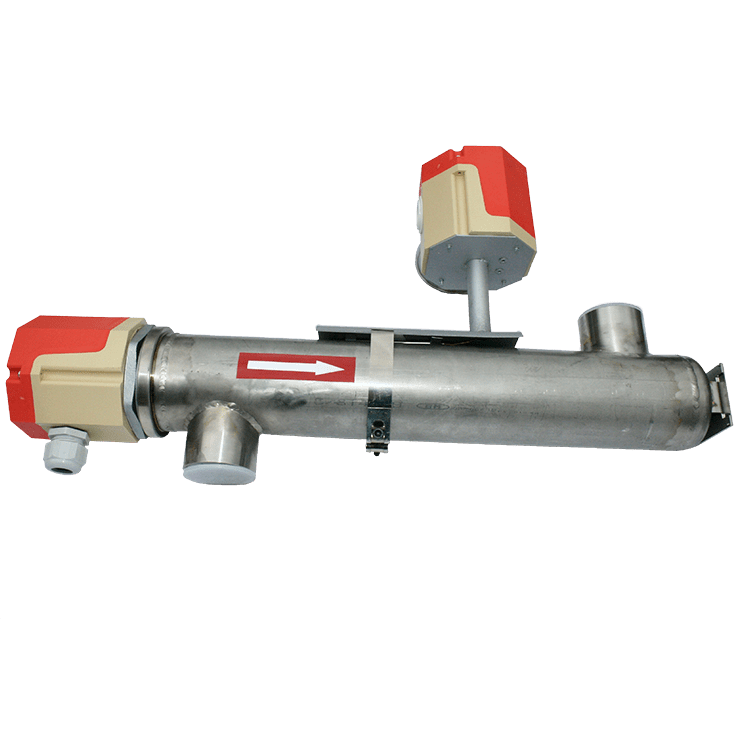
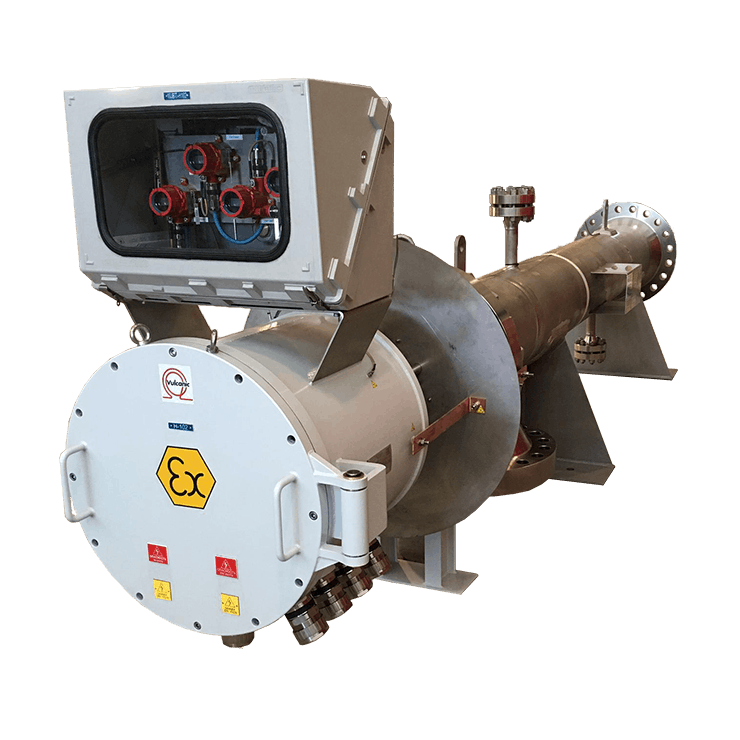
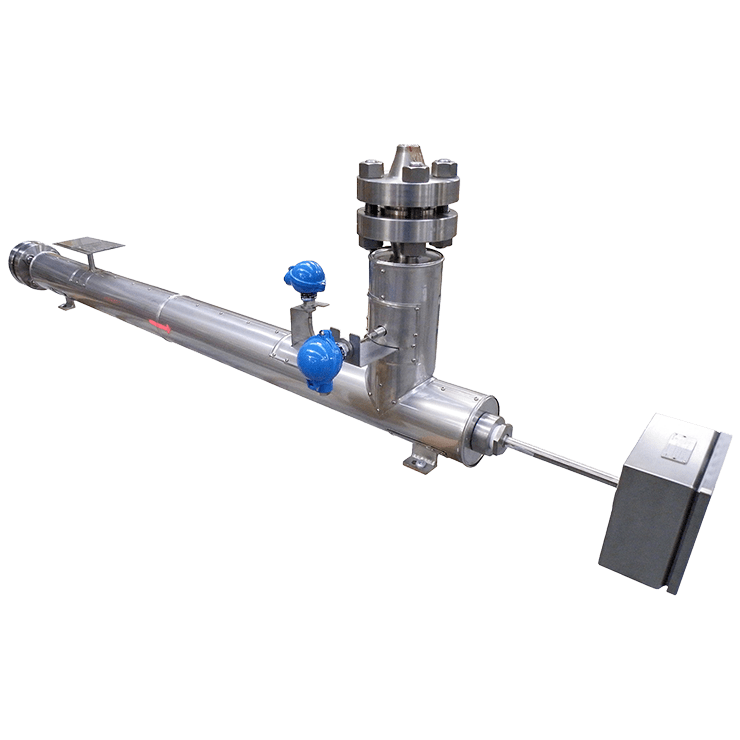
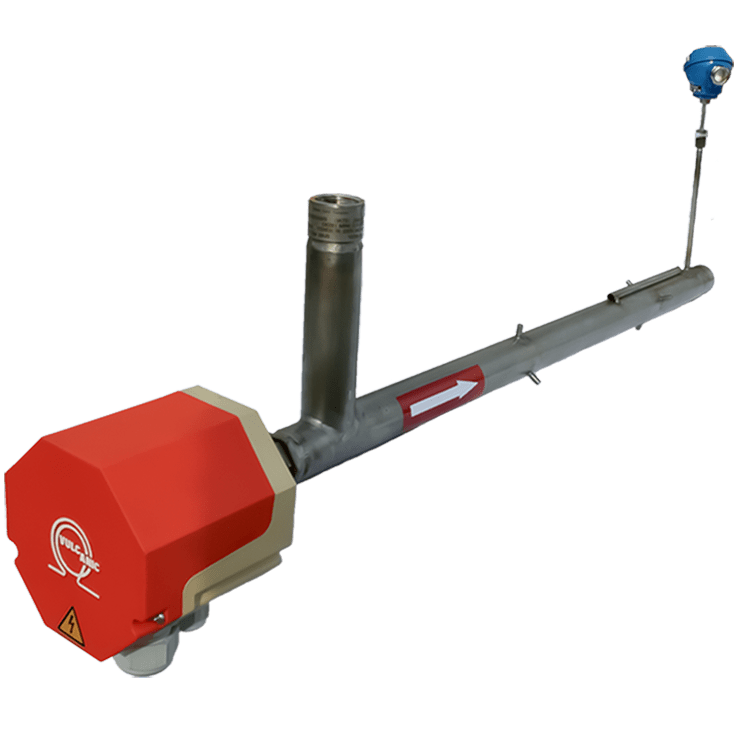
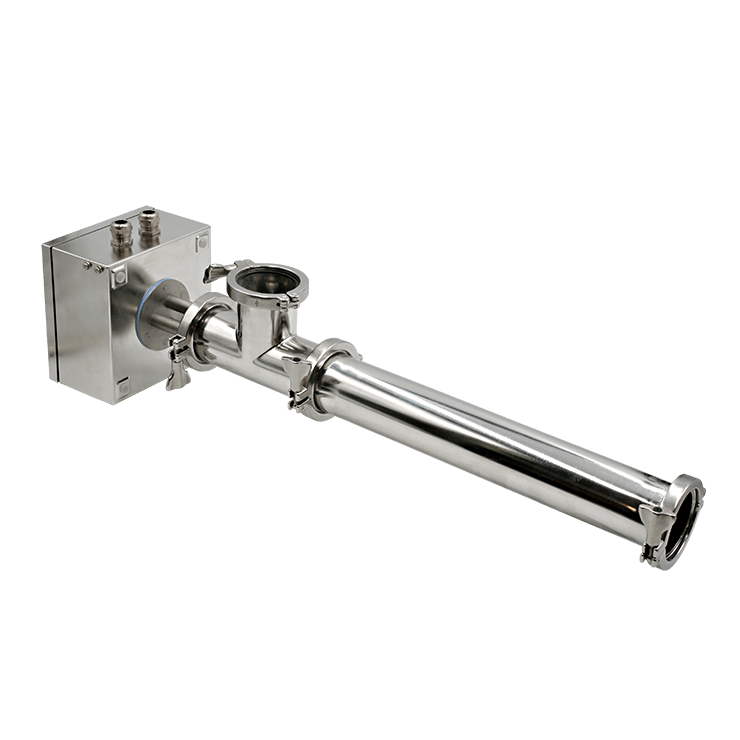
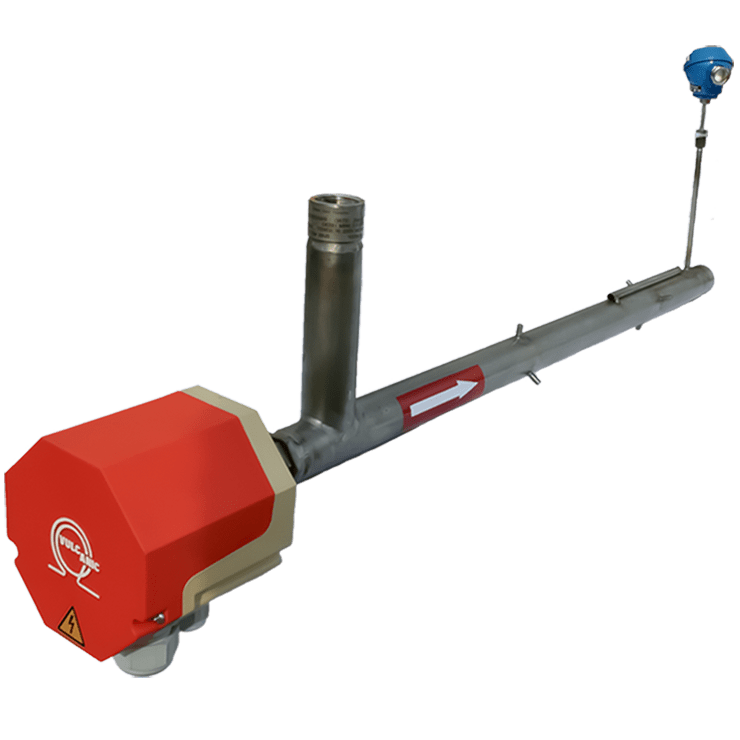
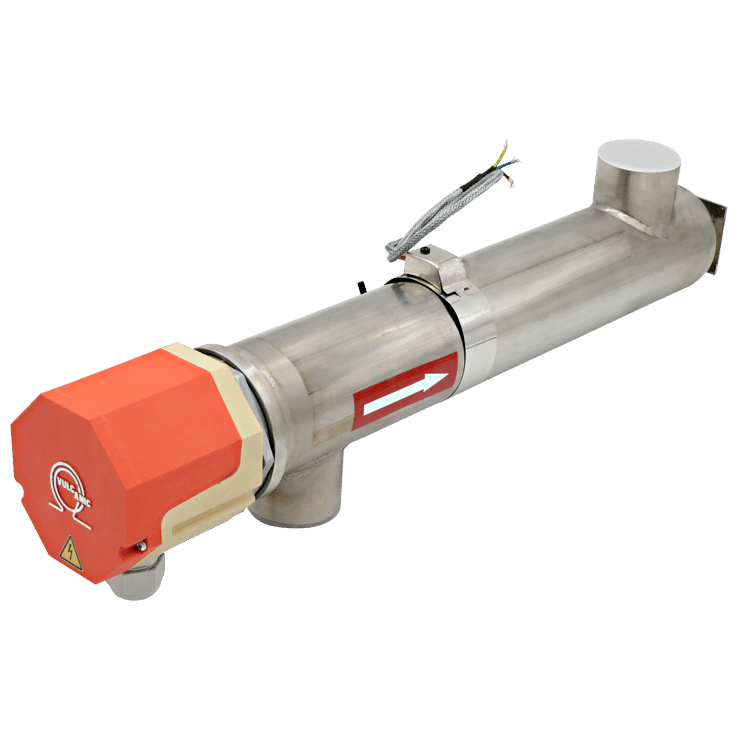
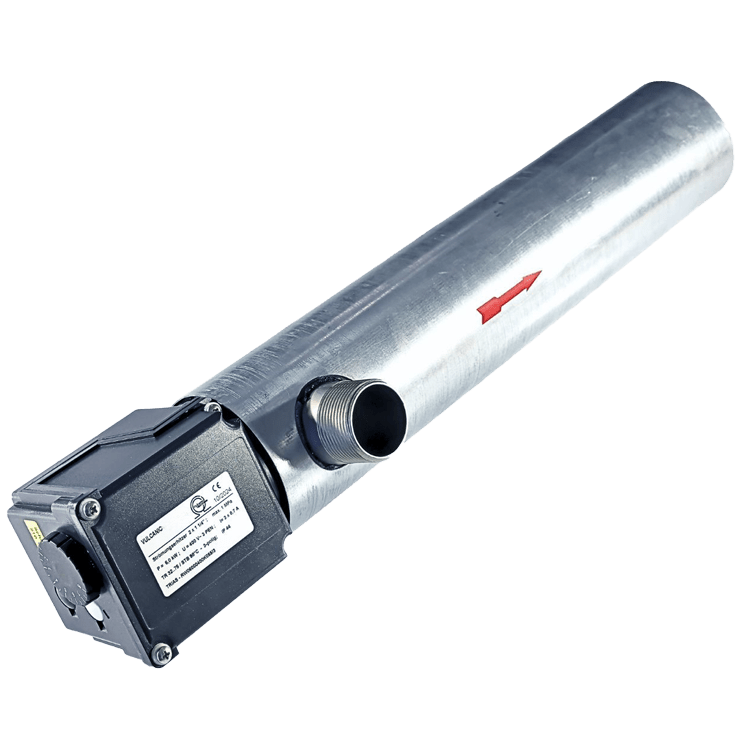
Electric inline heaters are designed to heat fluids in circulation under pressure, whether liquids (water, oil, aqueous solutions, etc.) or gases (air, nitrogen, etc.). They are integrated directly into a process line, where the fluid circulates through a boiler containing shielded electric heating elements.
In an open circuit, the fluid is heated in a single pass through the device. In a closed circuit (loop), the fluid is gradually brought to the desired temperature through several successive passes through the heater.
In-line heaters are widely used in various industrial sectors such as oil and gas, food processing, and pharmaceuticals. They can be used in a wide range of applications, such as fluidizing hydrocarbons to facilitate pumping or transfer, heating decontamination solutions in pharmaceutical facilities, and implementing drying processes using heated air or gas.
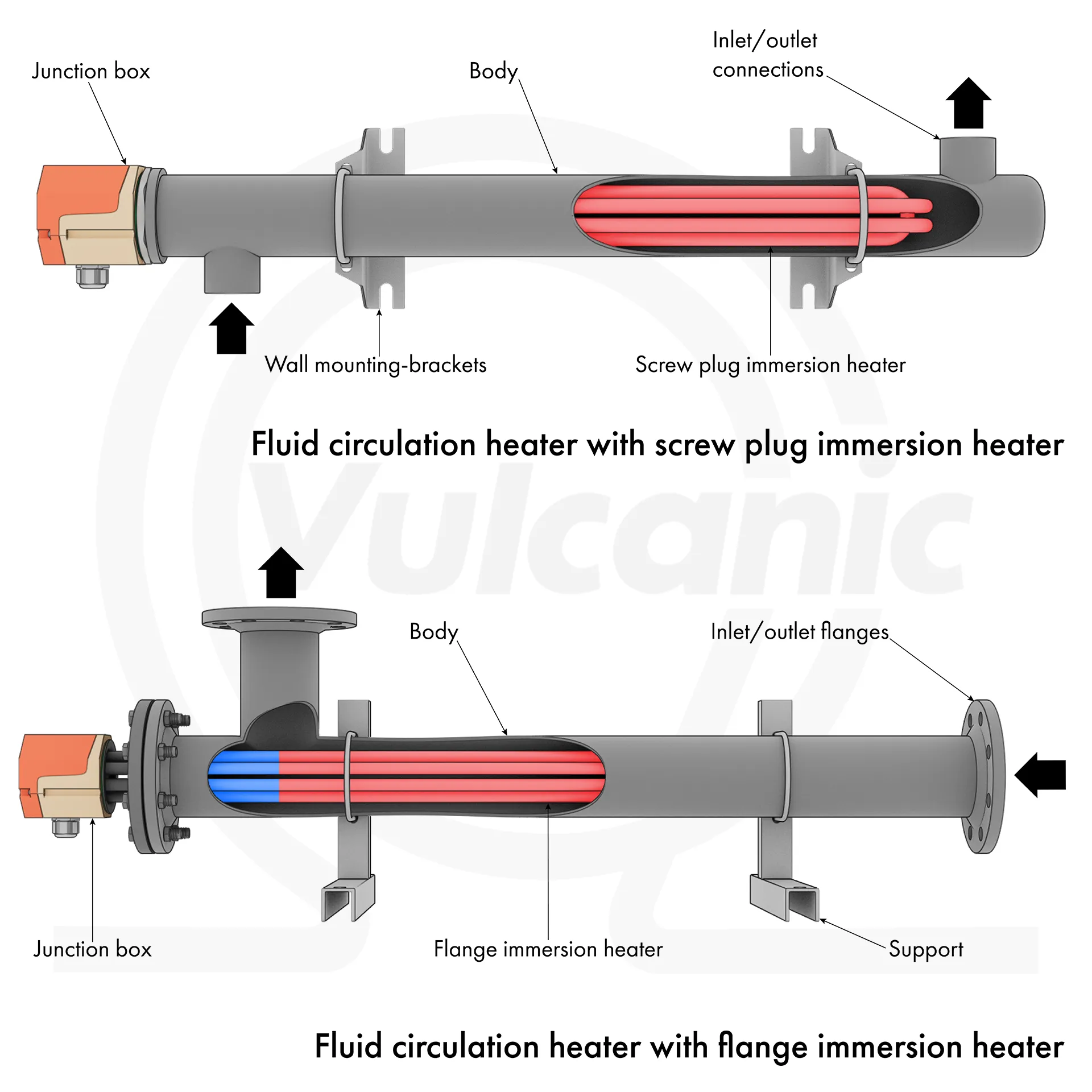
The shielded electric heating elements, integrated into the heater body, transfer heat directly to the fluid by forced convection, ensuring efficient and uniform heat transfer.
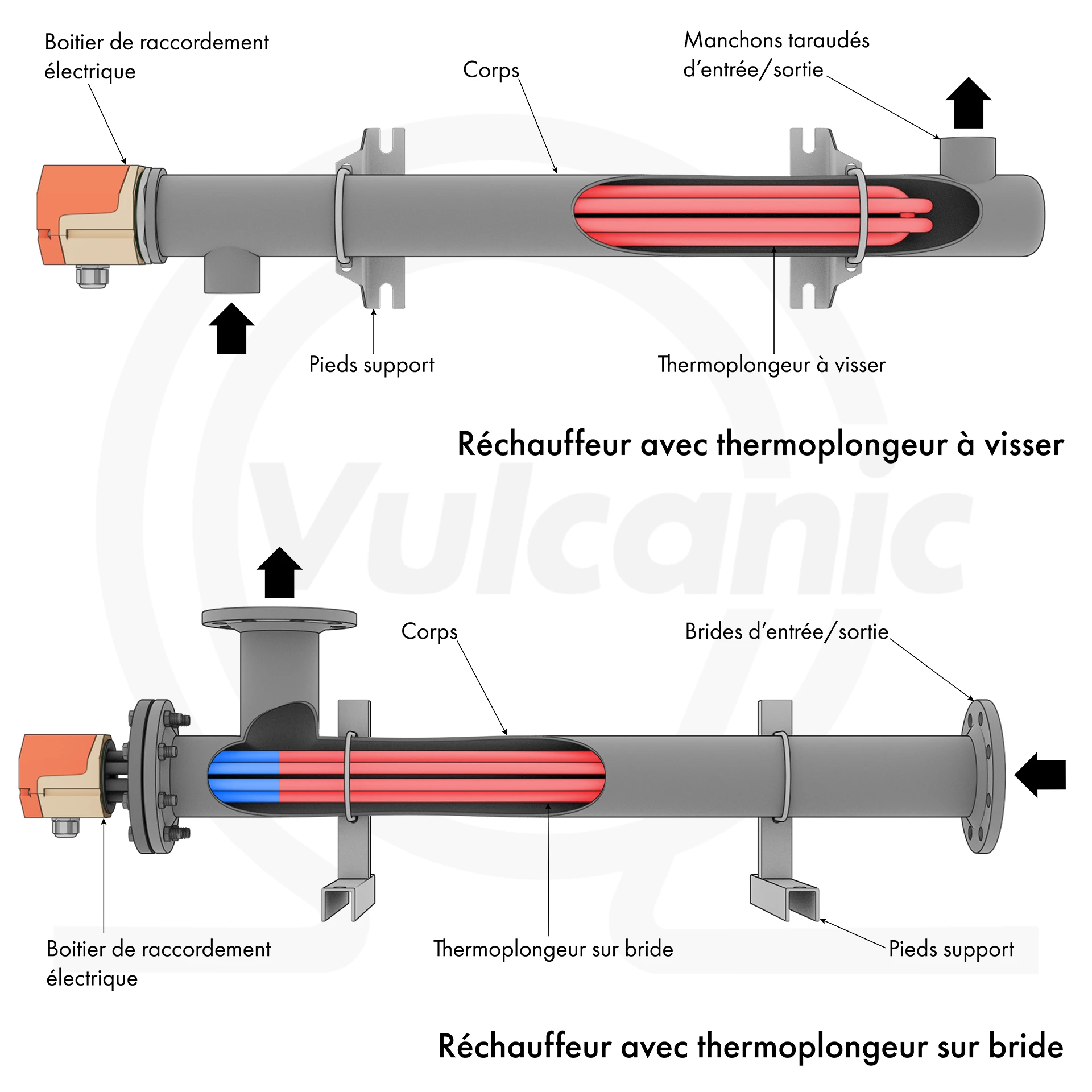
An inline heater consists of one or more steel or stainless steel bodies with inlet and outlet ports made from threaded sleeves or standard flanges. It incorporates one or more immersion heaters that can be screwed in or flanged on, depending on the configuration.
The device can be equipped with safety and control devices (adjustable thermostat, Pt100 sensor, or thermocouple). It can also be insulated using thermal insulation and an external protective jacket to limit heat loss and protect operators.
In-line heaters can be designed according to various construction codes (ASME, CODAP, etc.) and in compliance with the European Pressure Equipment Directive (PED 2014/68/EU).
Robust and reliable, they are suitable for demanding industrial environments such as nuclear, offshore, or potentially explosive atmospheres (gas), with ATEX and IECEx certified equipment.
- Unit power: from 500 W to 10 MW
- Supply voltage: single-phase (230 V) or three-phase (400 V, 690 V)
- Maximum design temperature: 565 °C for liquids and 820 °C for gases
- Maximum design pressure: up to 365 bar
- Applicable standards for bodies: EN, ASME, ASME BPE, SMS, etc.
- Body diameters: from DN 20 to DN 1000 (with inch equivalents)
- Several shades of materials for bodies and armored resistors, depending on the nature of the fluid and the constraints of the process