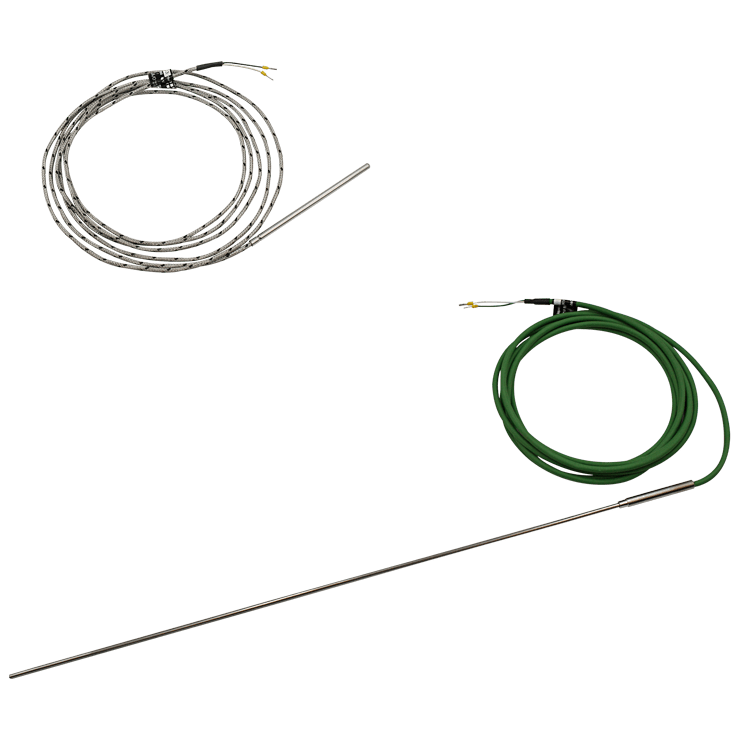
The Pt100 temperature sensor is widely used in industrial, scientific and technical applications. It measures temperature with great precision, thanks to a well-known physical property: the electrical resistance of platinum (chemical symbol: Pt) varies predictably with temperature.
The "100" in Pt100 means that the sensor has a resistance of 100 Ohms at 0°C. As the temperature rises, so does the resistance. By measuring this variation, it is possible to determine temperature with great reliability.
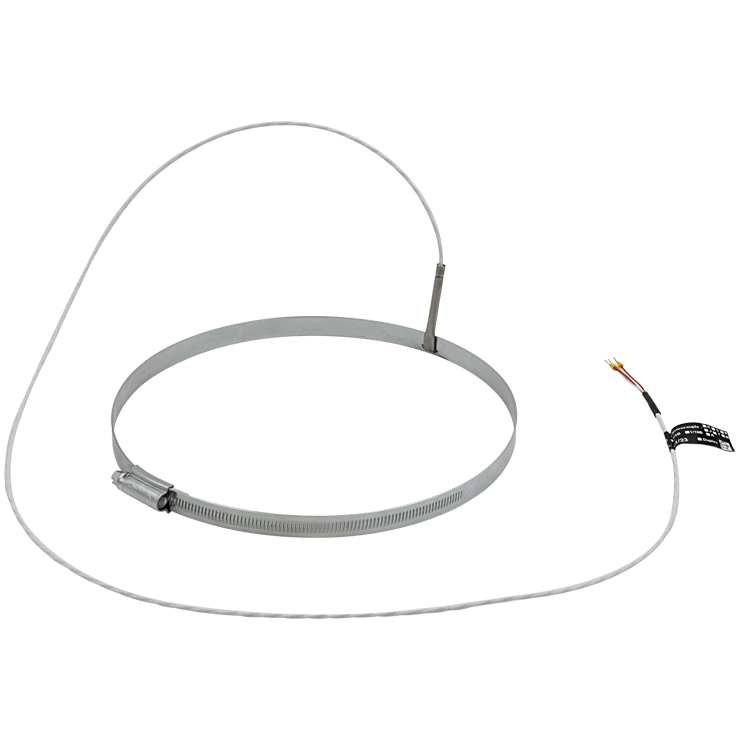
It can be rigid or deformable, and can be inserted or immersed in the medium to be measured. It is ideally suited to industrial applications between -50°C and 500°C, in the absence of strong vibrations. Standard measurement accuracy is +/- 0.3°C at 0°C.
Pt100 probes are widely used in various sectors (agri-food, environment, chemicals, etc.), for measuring temperatures of gases, liquids or solids.
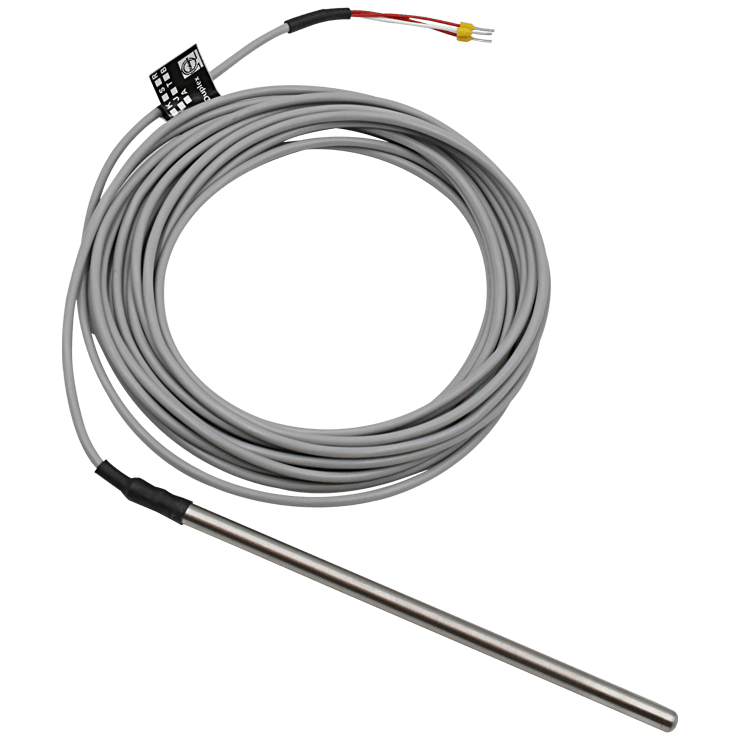
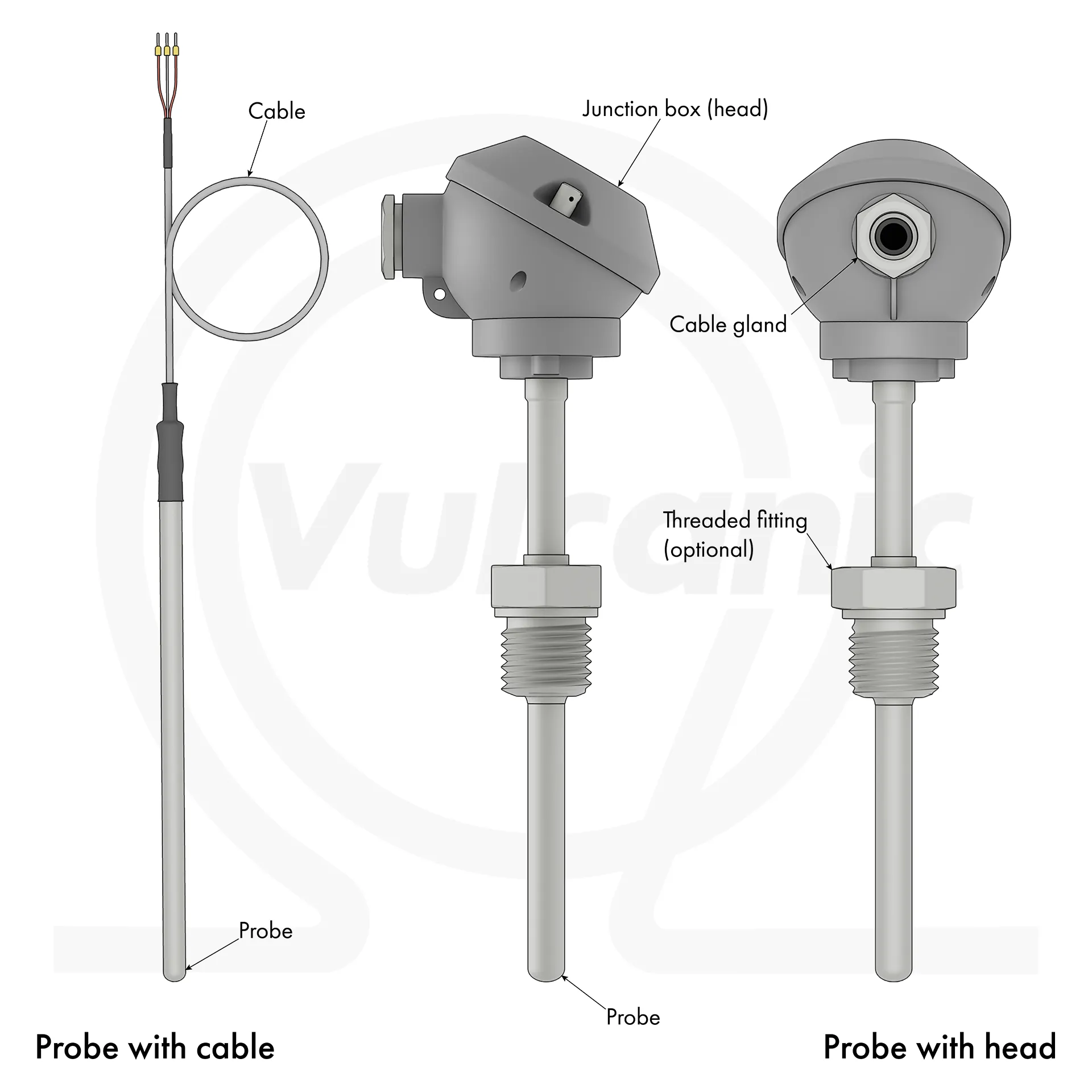
They consist of a platinum sensing element mounted on an insulating support (ceramic or glass). This element is connected to 2, 3 or 4-wire conductors, depending on the level of precision required. The whole system is protected by a metal sheath that is resistant to mechanical, chemical or thermal conditions.
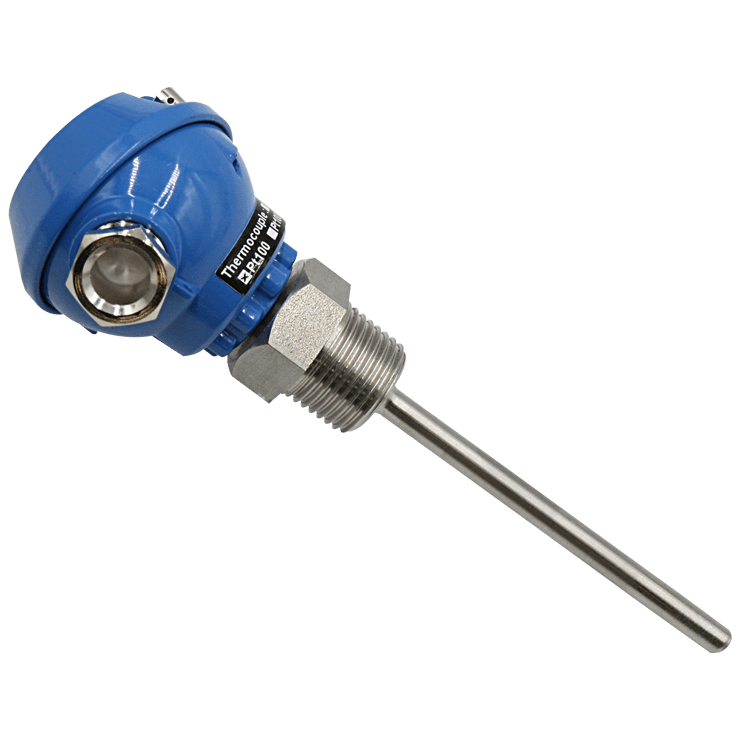
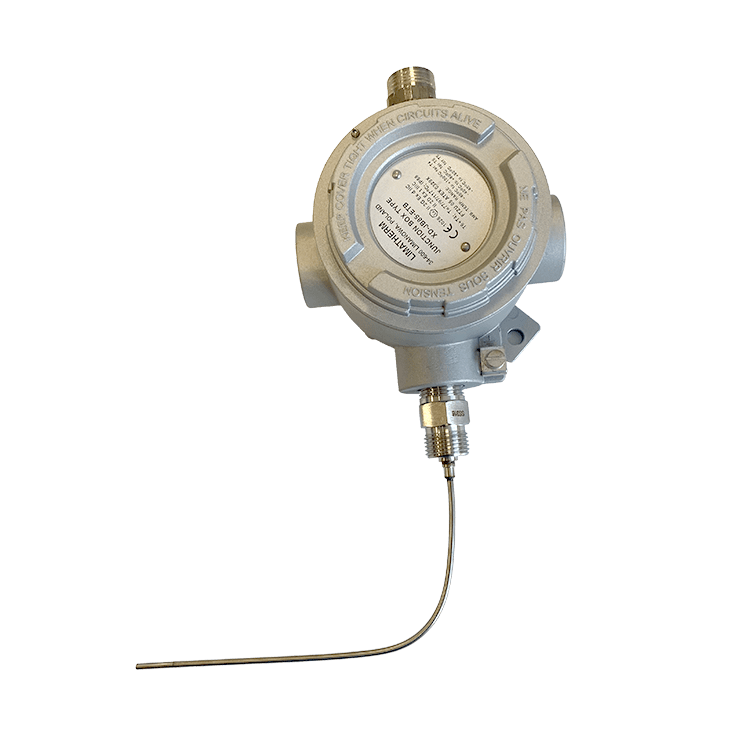
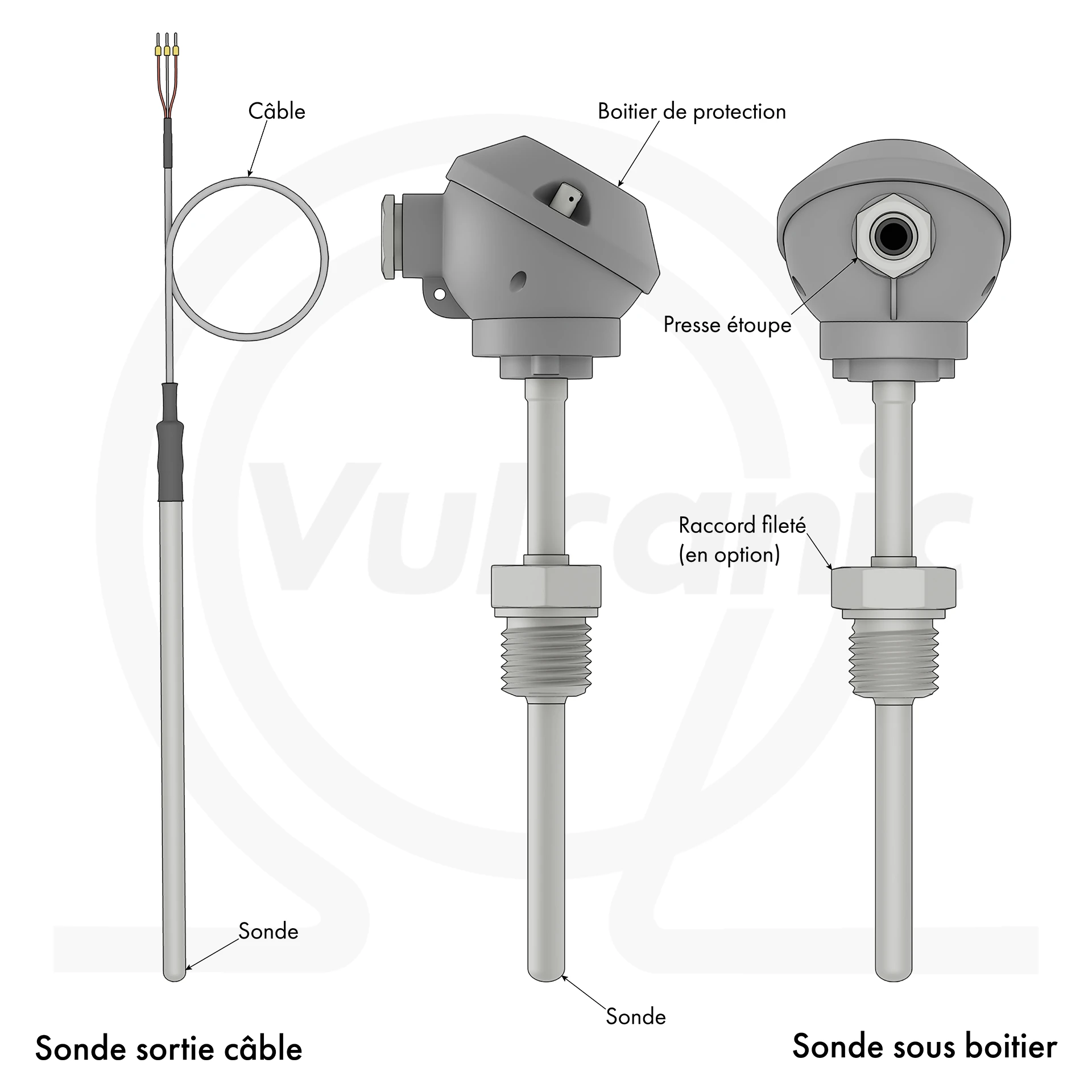
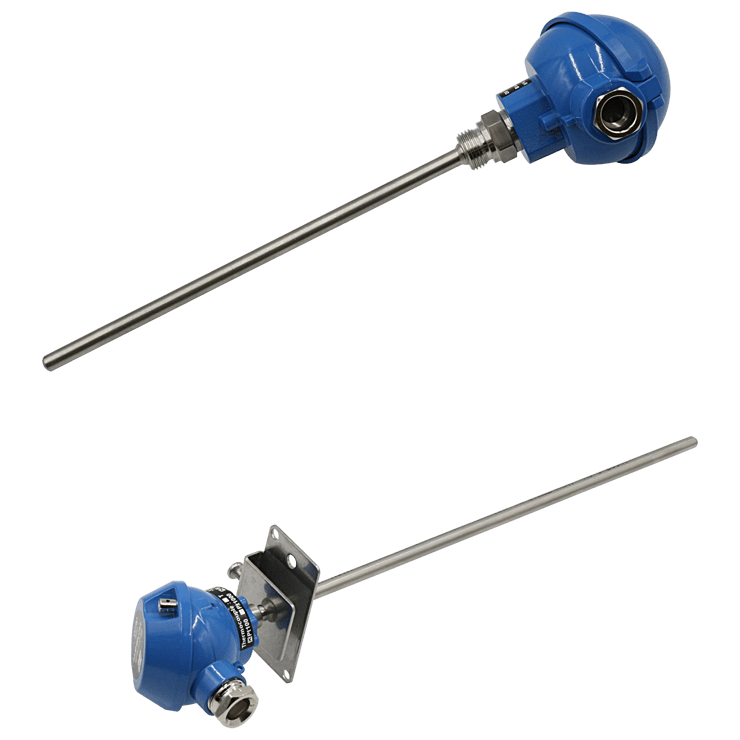
The probe is usually fitted with an output cable or protective case.
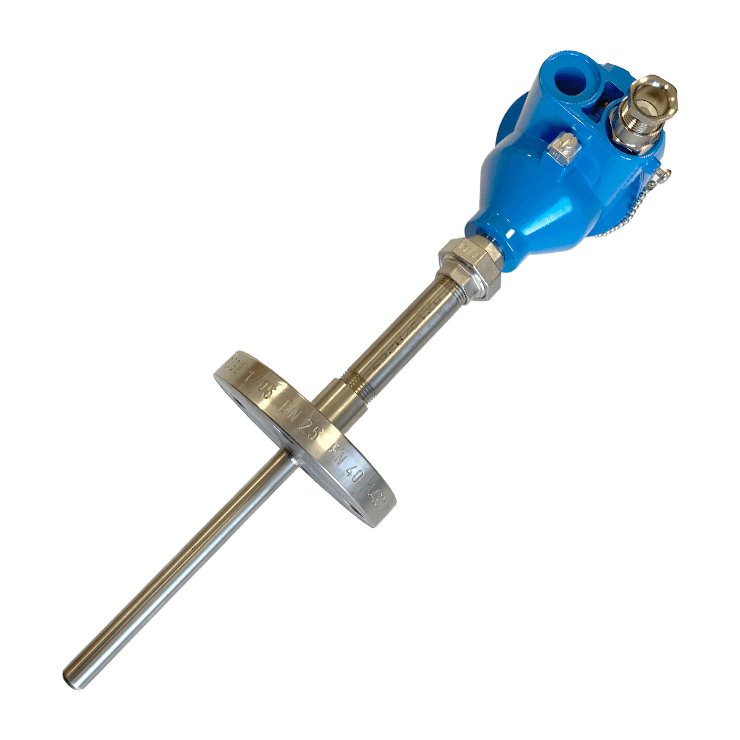
As an option, it can be fitted with a fastening device (flange, threaded fitting...) and sometimes also incorporates a temperature transmitter mounted in the probe head, which converts the resistance signal into an analog signal.
The probes are available in various diameters and lengths. They can be installed in demanding environments, such as the nuclear sector or explosive atmospheres, thanks to ATEX-certified models.
- Diameter from 2 to 8 mm
- Material stainless steel 316l or Inconel 600
- 2, 3, 4-wire or 2 x 3-wire, 2 x 4-wire installation
- Precision tolerances: Class A, Class B, 1/10 Class B