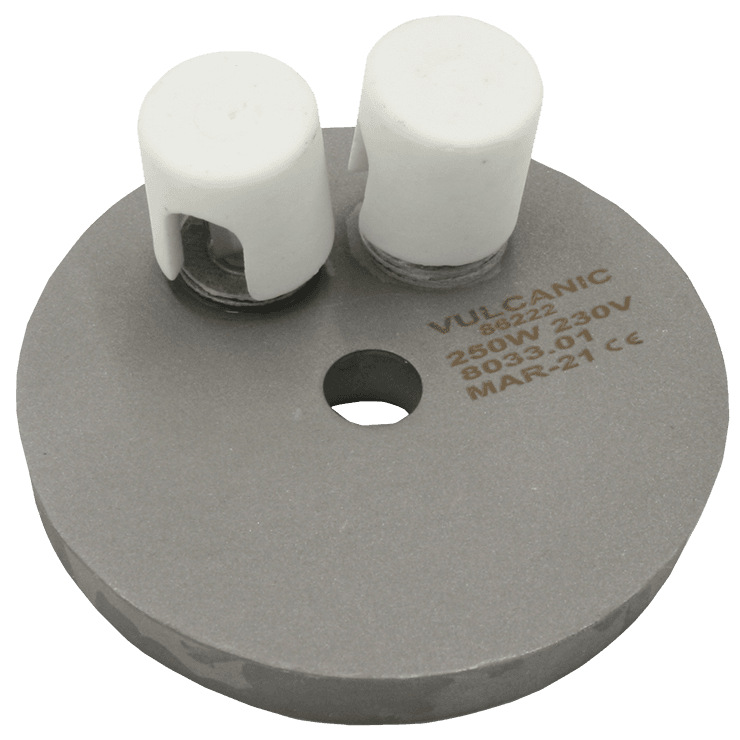
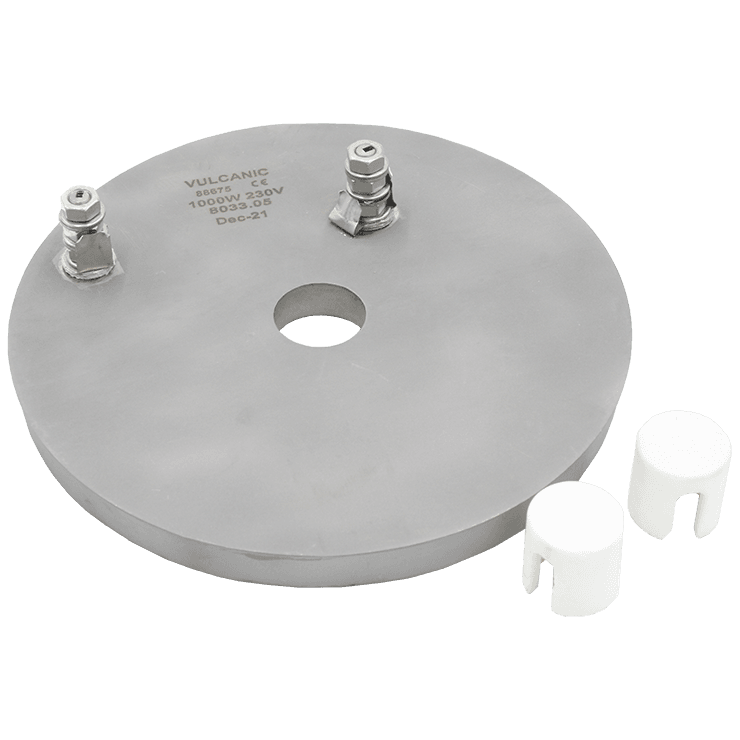
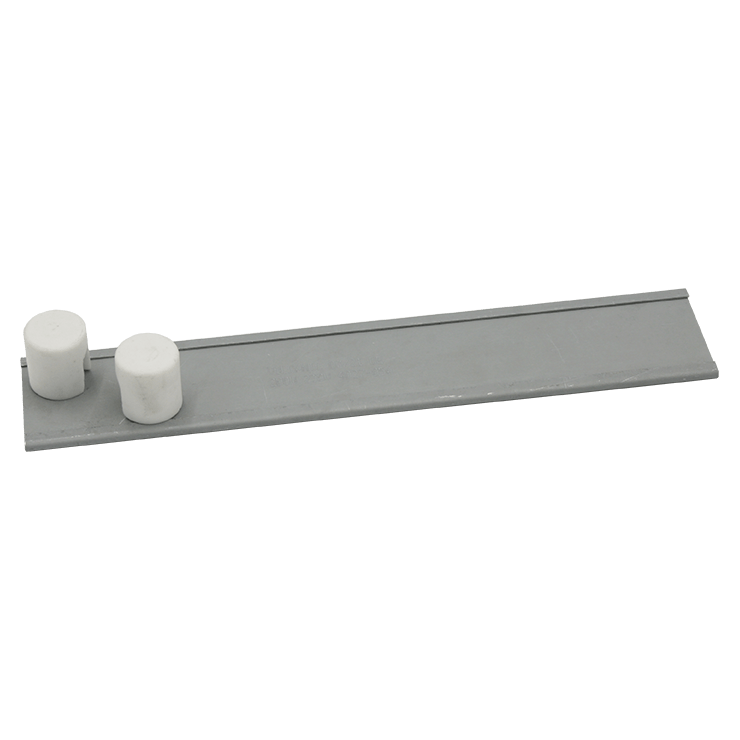
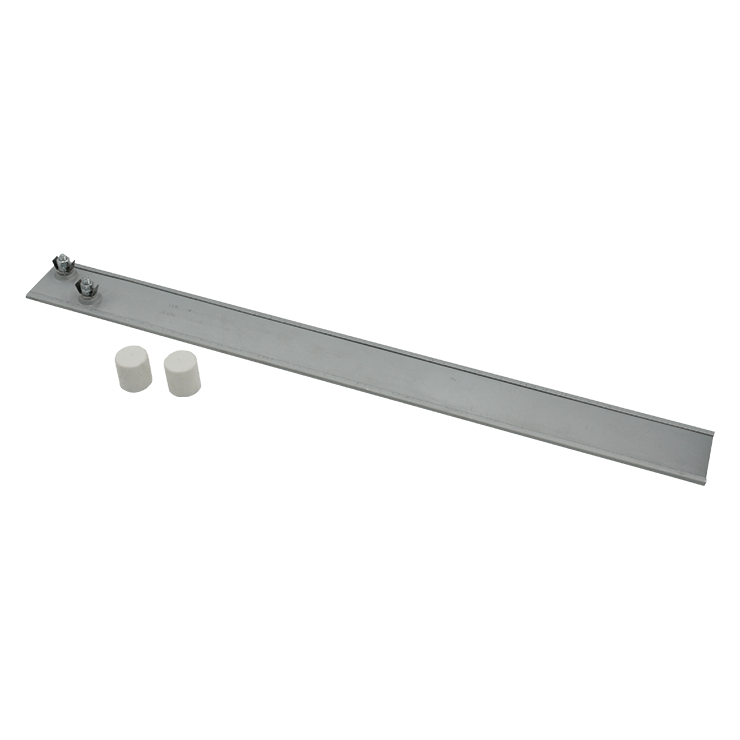
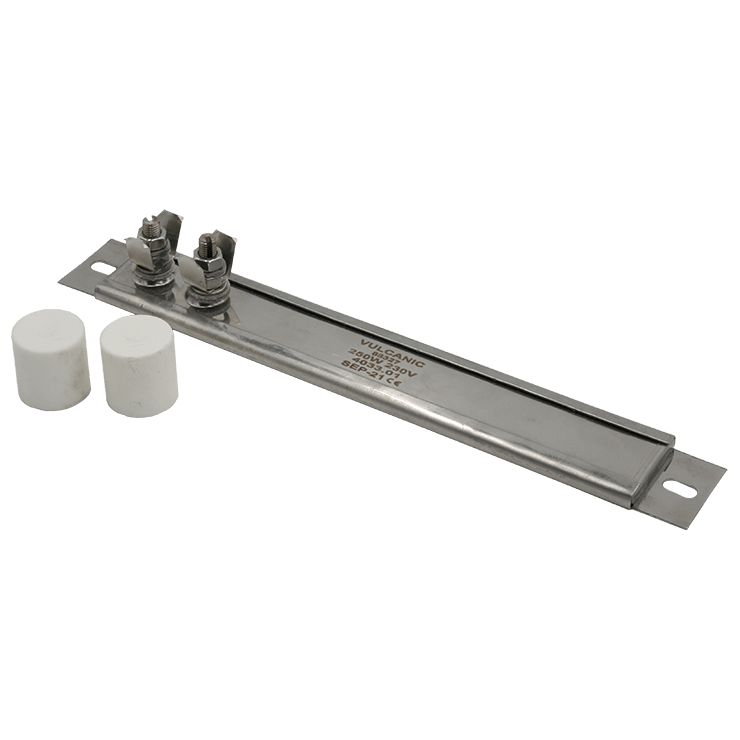
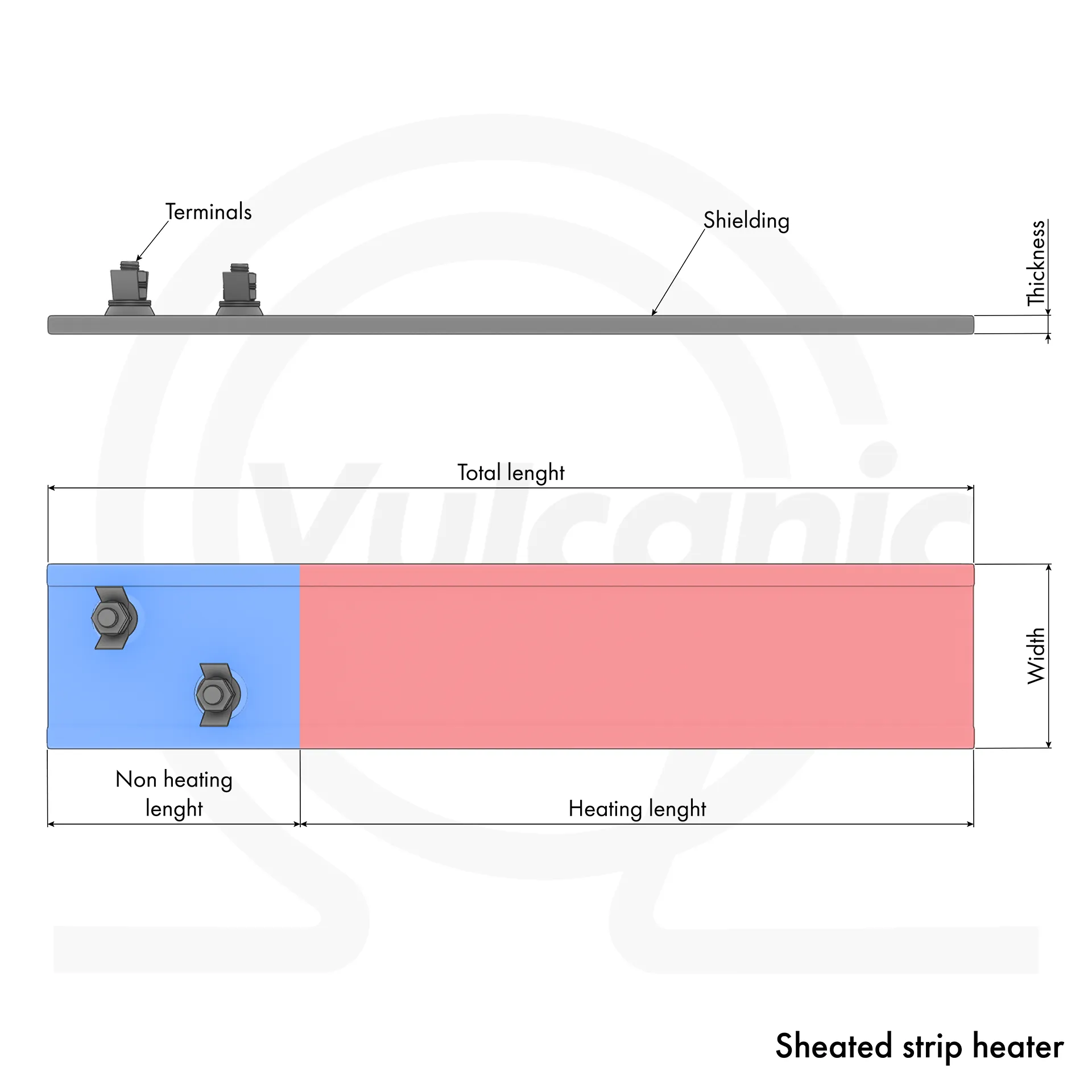
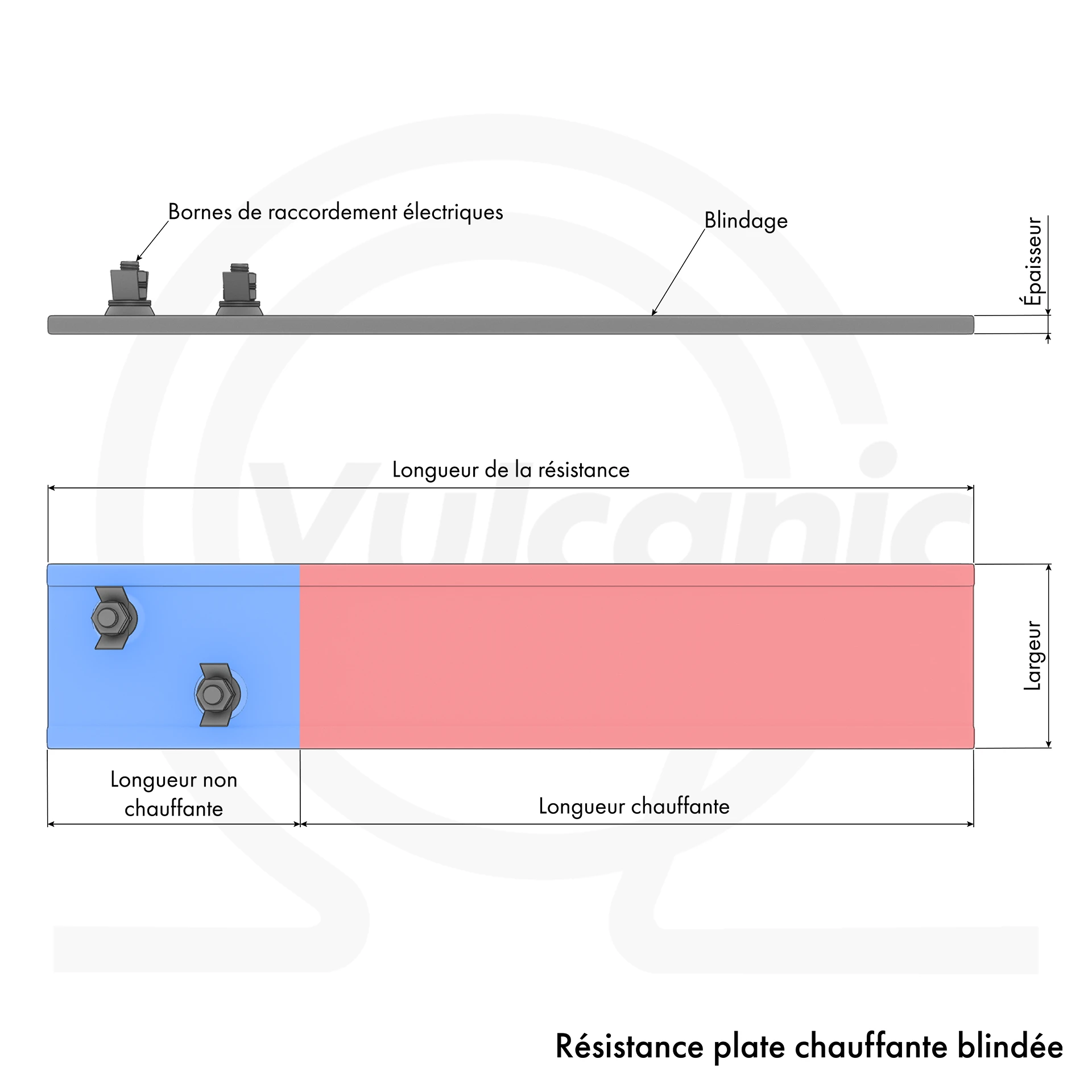
Flat electric heating elements are designed for heating flat metal surfaces, such as tooling, heating tables or trays, and molds. They can also be used for indirect heating of liquids or powdery products contained in tanks, by being fixed under the bottom or outer walls.
They are widely used in various industrial sectors (plastics, food processing, chemicals, etc.), notably for heating press platens, maintaining the temperature of products stored in tanks, or heating molds during the manufacture of composite parts.
Heat is transferred mainly by conduction, whether when the flat resistor is applied to a metal part, or when heating a product through the walls or bottom of a container. This heating method ensures even, rapid and efficient heat distribution.
Vulcanic offers two technologies:
- Shielded mica flat resistors consist of a resistive heating ribbon wound on a mica insulating plate. The whole assembly is protected by a sheet steel or stainless steel shield, which ensures both mechanical protection and good heat transfer by conduction to the surface to be heated.
Thin (3 to 4 mm), flat mica resistors have a maximum operating temperature of 300°C and a maximum load of 4.2 W/cm2.
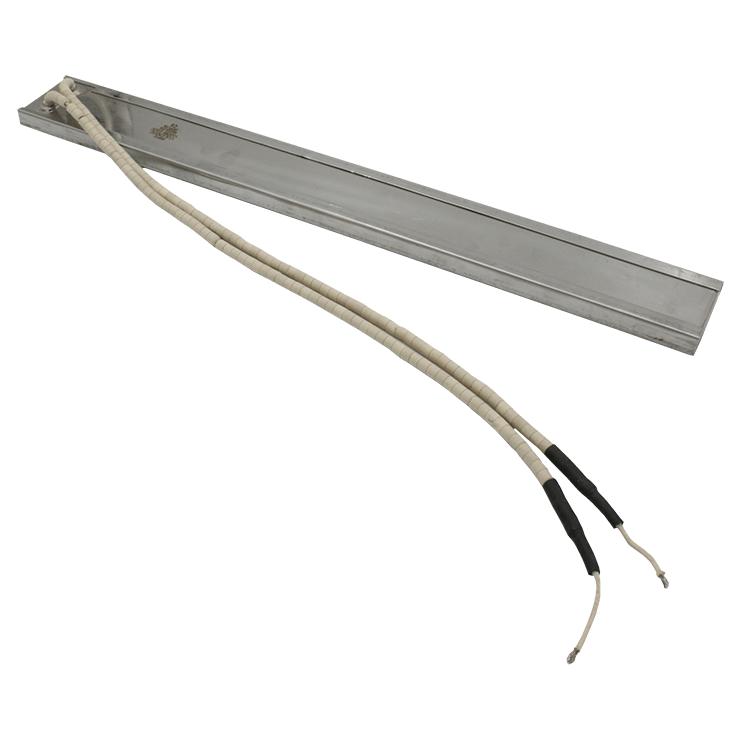
- Shielded ceramic flat resistors incorporate a coiled resistance wire mounted in ceramic insulating elements. This is then covered with a stainless steel shield.
They can be used up to temperatures of 700°C with loads of 6.5 to 8 W/cm2.
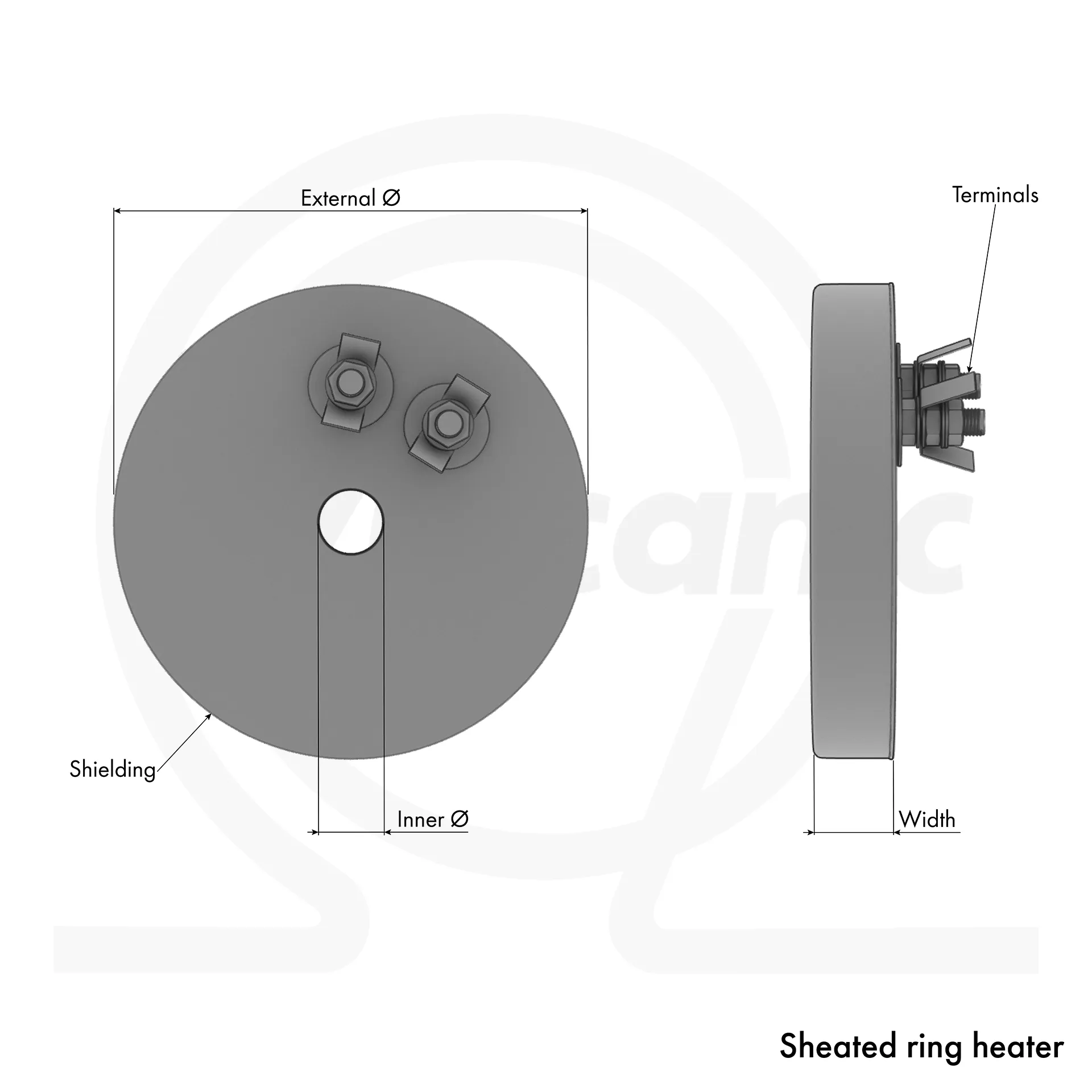
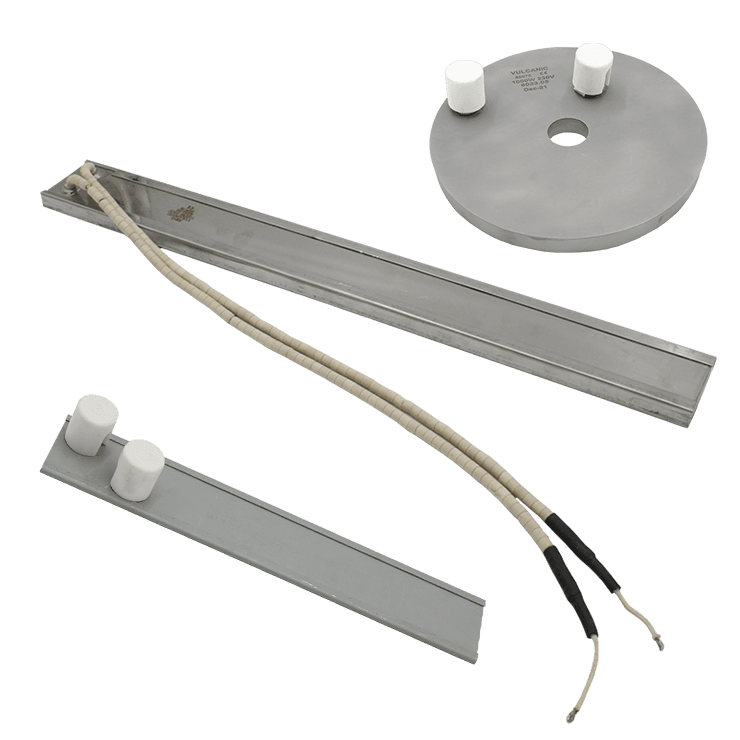
Electrical connection can be via threaded terminals or direct cable outlet, depending on the application and installation constraints.
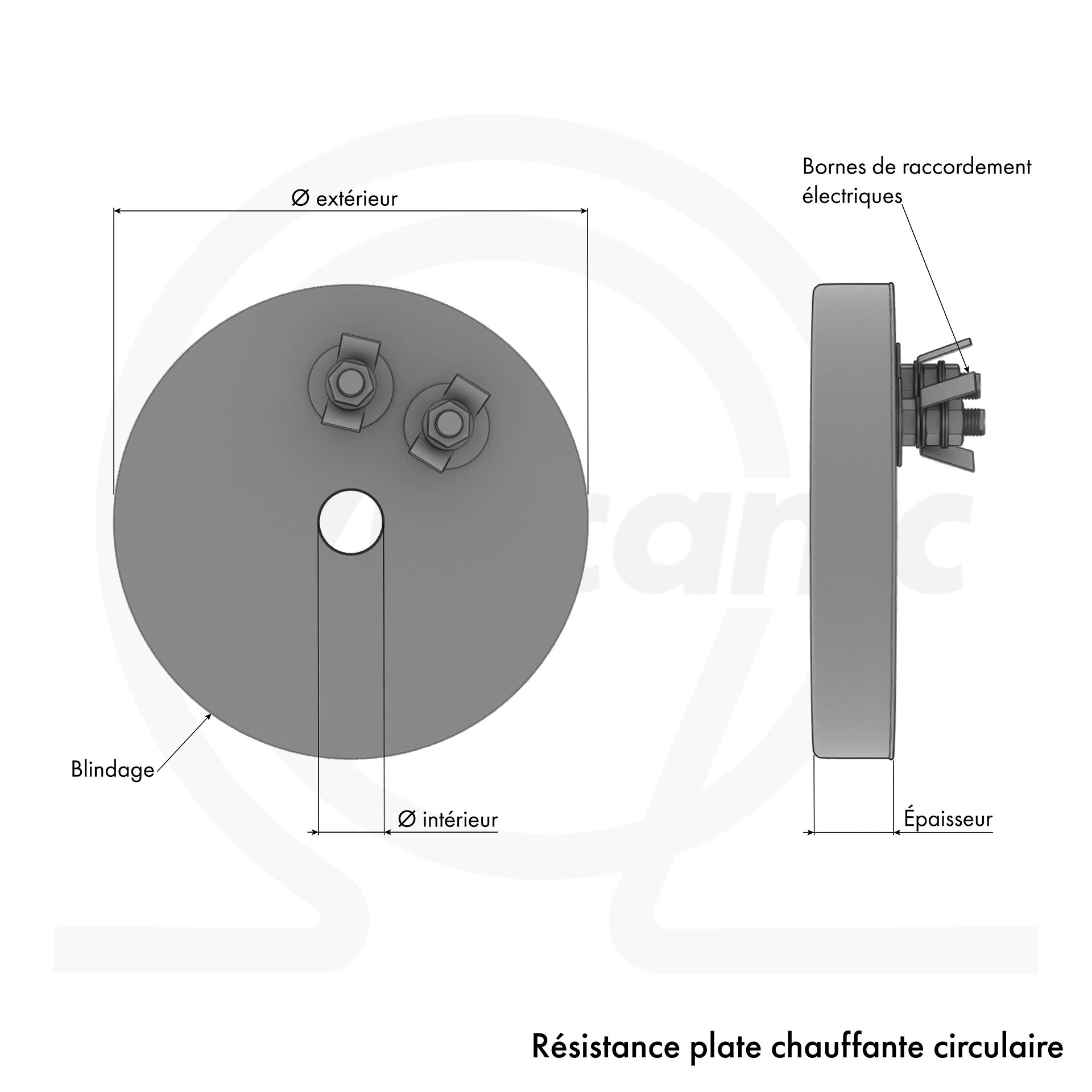
Rectangular or round, resistors can be manufactured in specific shapes, depending on the technology used. They can incorporate holes for mounting, probe passage, or the addition of pipe tappings.
External mounting allows quick access to the resistor, facilitating replacement without dismantling the system or prolonging production downtime.
- Unit power from 200 W to 2000 W.
- Single-phase voltage 230 V.
- Maximum operating temperature: 300 to 700°C depending on technology