Electric heating and cooling solutions for industry

Home > Products > Standard Products > finned heaters

finned heaters

Definition and general information

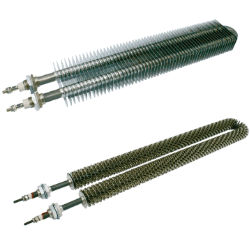
finned resistor
envirolée resistance
finned resistor
envirolée resistance

finned heaters are designed to heat ambient air in enclosures, ovens, or cabinets, as well as to heat air flowing through ducts or conduits. They can also be used to maintain air volumes at a certain temperature to prevent freezing, avoid condensation, or defog glass surfaces.

They are widely used in various industrial sectors (air handling unit manufacturers, chemicals, food processing, industrial processes, etc.) for space heating, drying components, and preventing condensation in electrical cabinets.

finned heaters integrated into many types of equipment, such as air heating coils, industrial radiators, and cabinet heaters.

In still air, heat transfer takes place by natural convection: the warmer, lighter air rises spontaneously around the heating elements, enabling heat exchange without mechanical intervention. In forced convection, air blown into a duct by a motorized fan is heated by contact with the electrical resistors, significantly improving heat exchange. The presence offins increases the heat exchange surface area and the heat transfer coefficient with the air, enabling higher power output for the same element length, and more compact equipment design.

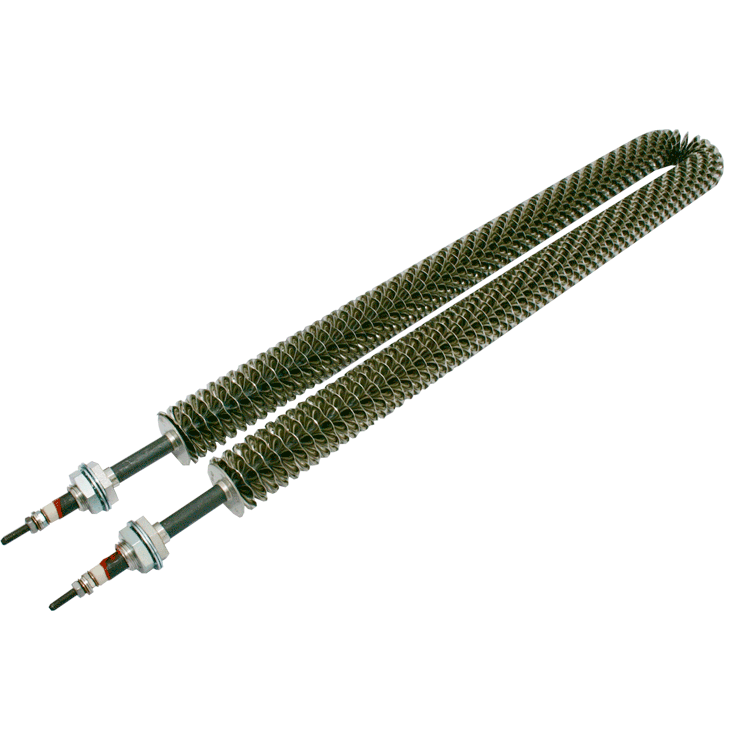
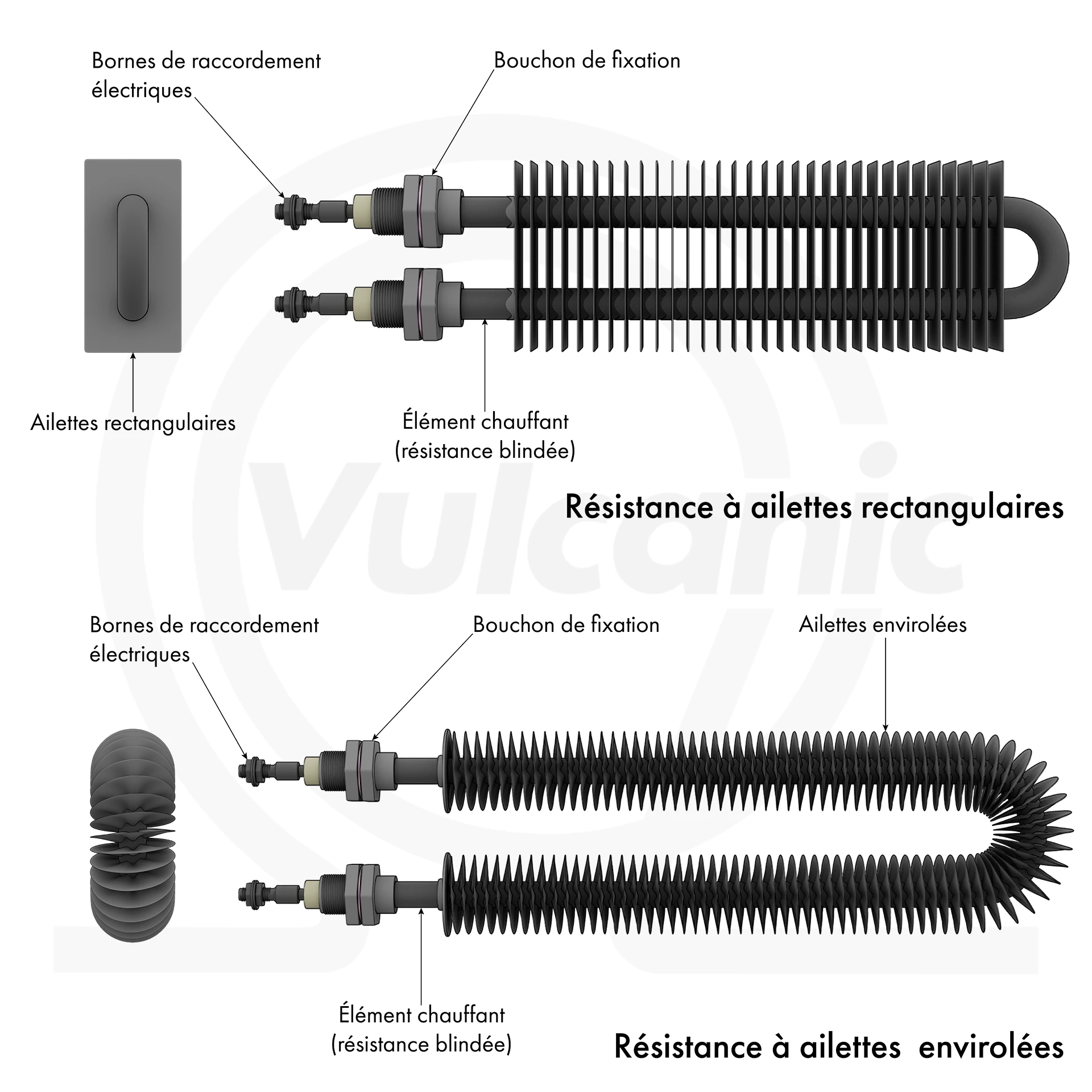
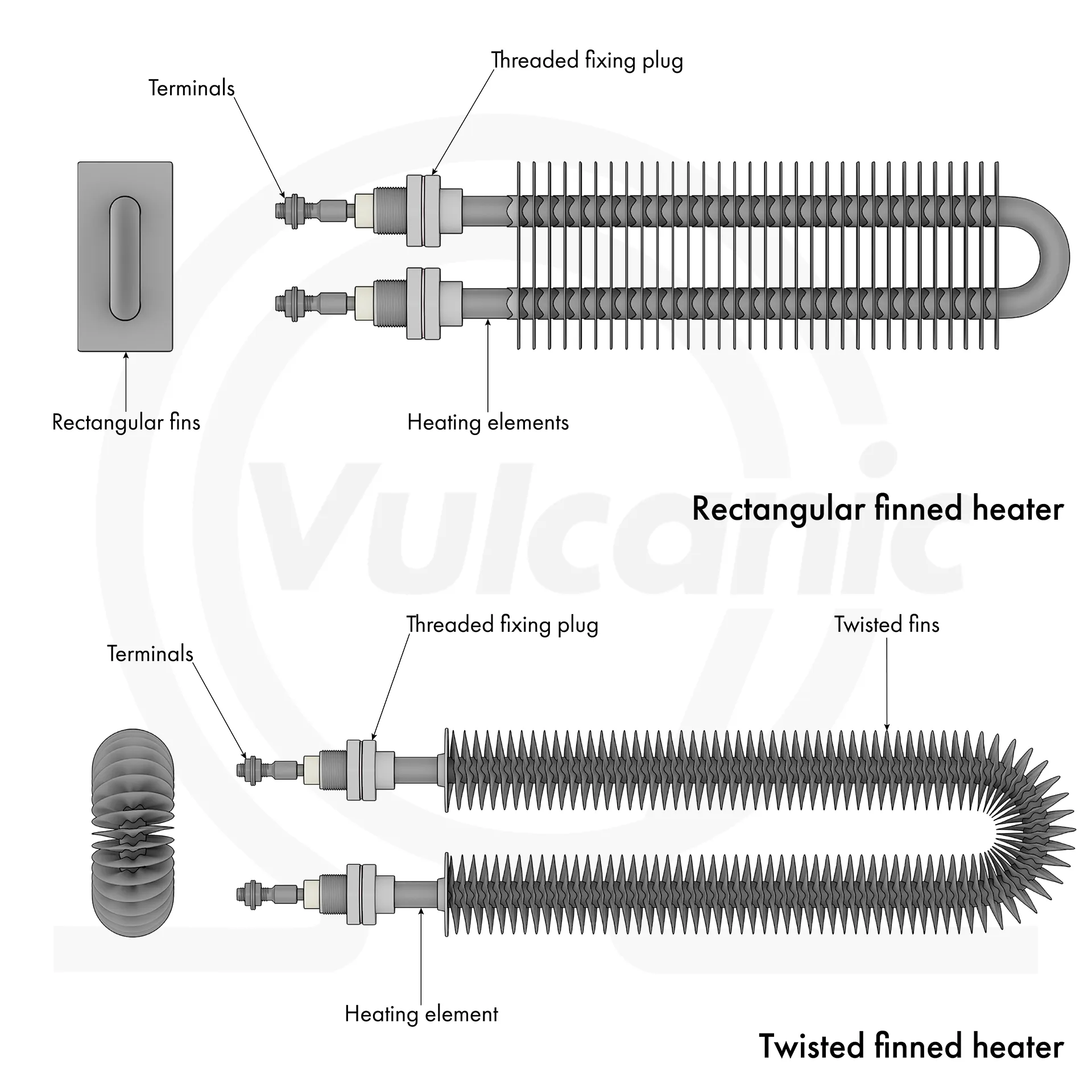
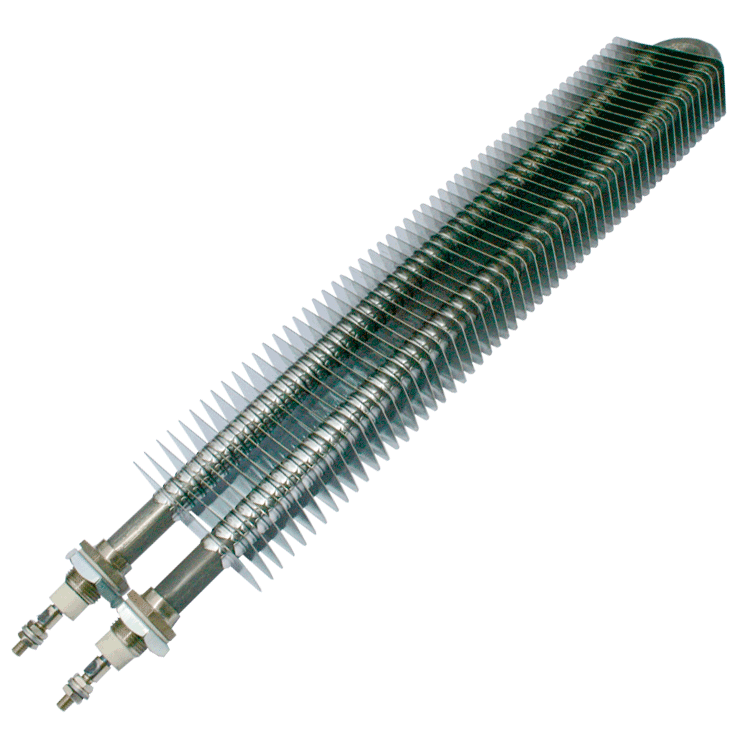
finned heaters a stainless steel tubular heating element surroundedby metal fins, either rectangular for conventional heat dissipation or wrapped around the element, offering a larger surface area and greater thermal efficiency. They are equipped with electrical connection terminals and are generally fitted with a fastening device such as threaded plugs or plates.

Robust, they can withstand surface temperatures of up to 650°C, making them ideal for use in the most demanding industrial environments.

  • Unit power from 100 W to over 10,000 W
  • Single-phase voltage: 110 V, 127 V, 230 V, 400 V.
  • 25 x 50 mm or 40 x 80 mm rectangular fins
  • Ø 28 mm curved fins
  • Electrical connection via threaded terminals, flat terminals, Faston connectors or direct cable outlet

Applications

finned heaters used in many applications. Here are some concrete examples:

Facilities management

finned heaters often used in Air Handling Units (AHUs) for space heating.

Energy sector

In a power station in a mountainous area, winter temperatures regularly drop below -15°C. Outdoor control and distribution cabinets are exposed to frost, which can damage sensitive components.

Industrial processes

Use of finned heaters the manufacture of load banks used to test generators and power generation systems.

Technical data

finned heaters of:

  • A tubular heating element formed into a Ø 8, Ø 10.2 or Ø 16 pin, in stainless steel 321 or stainless steel 316L.
  • Rectangular fins, 25 x 50 mm or 40 x 80 mm, in ferric (F17) or austenitic (304L) stainless steel, welded to the heating element.
  • For envirolé resistors, the fin consists of a single 304L stainless steel strip, wrapped around the heating element.
  • Threaded plugs with gaskets and nuts for fixing the resistor to a support or enclosure wall.
  • Electrical connection terminals (threaded terminals, flat terminals, Faston connectors), or direct cable output.

Further information

  • finned heaters be used alone in ATEX environments.
  • In addition to the wide range of finished products available in our online catalog, Vulcanic can design custom-made equipment to meet your specific requirements (power, voltage, dimensions, etc.).

Recommendations

Precautions for use

Do not obstruct the fins: leave enough space around the resistor to ensure proper heat dissipation.

Ensure sufficient air flow to avoid overheating, especially with forced convection.

Installation and connection

For natural convection, install heaters horizontally, flat, to promote natural circulation of hot air. We recommend supporting the ends of long heaters to prevent distortion.

For forced convection, heaters can be installed horizontally or vertically, in the direction of air flow. Make sure that the fins do not block air circulation.

Please refer to the instruction manual for all recommendations relating to the equipment.

Fill out the form below to apply for the position of: finned heaters

* All fields must be completed

Fill in the form below to submityour unsolicited application

* All fields must be completed