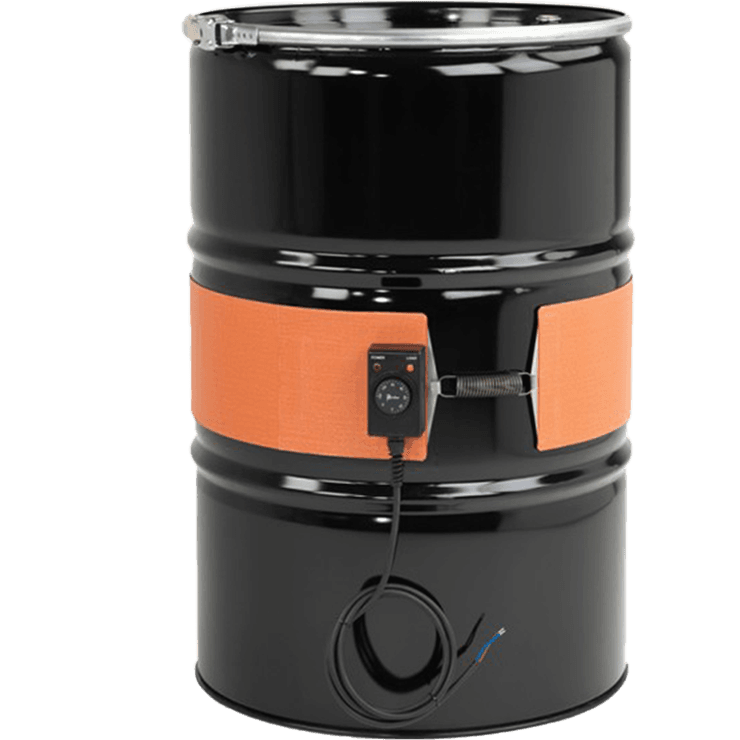
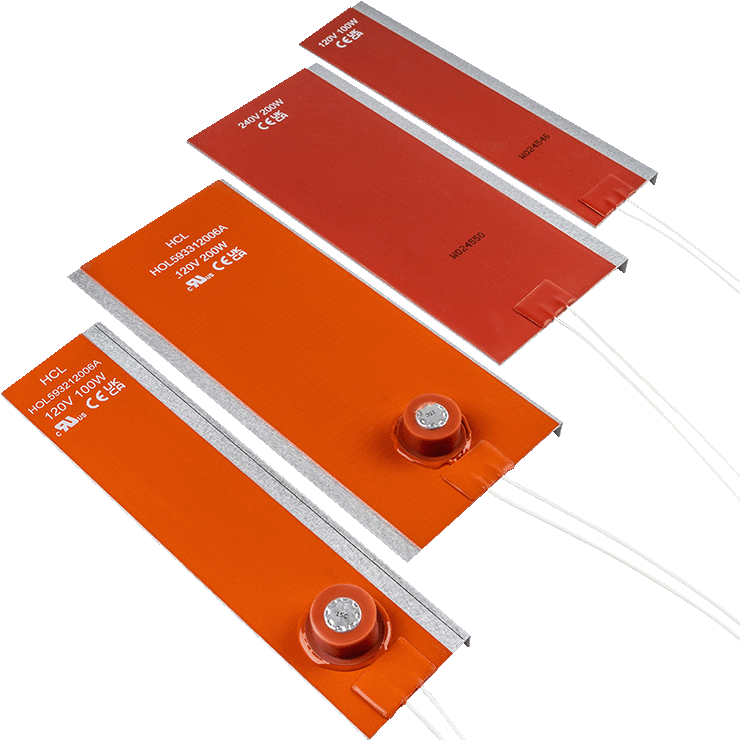
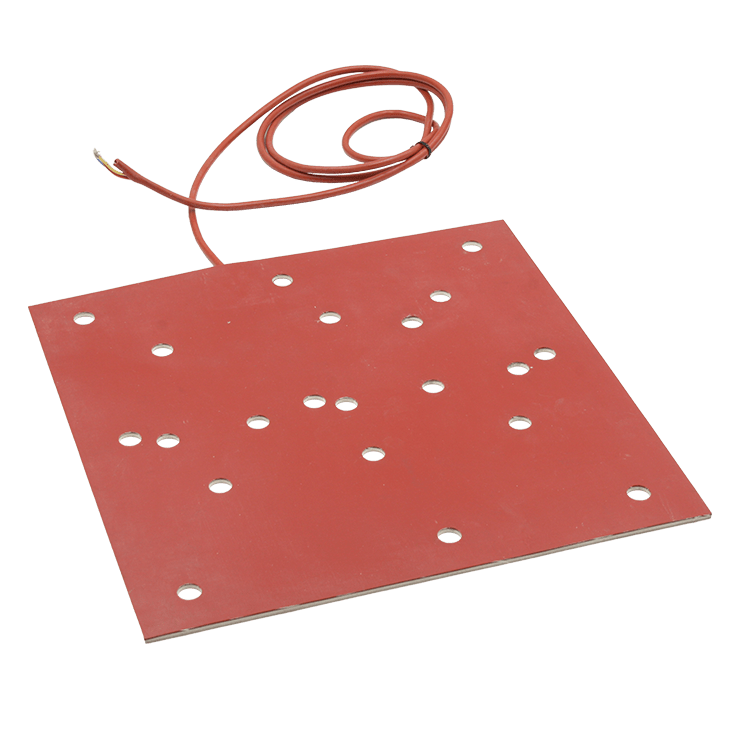
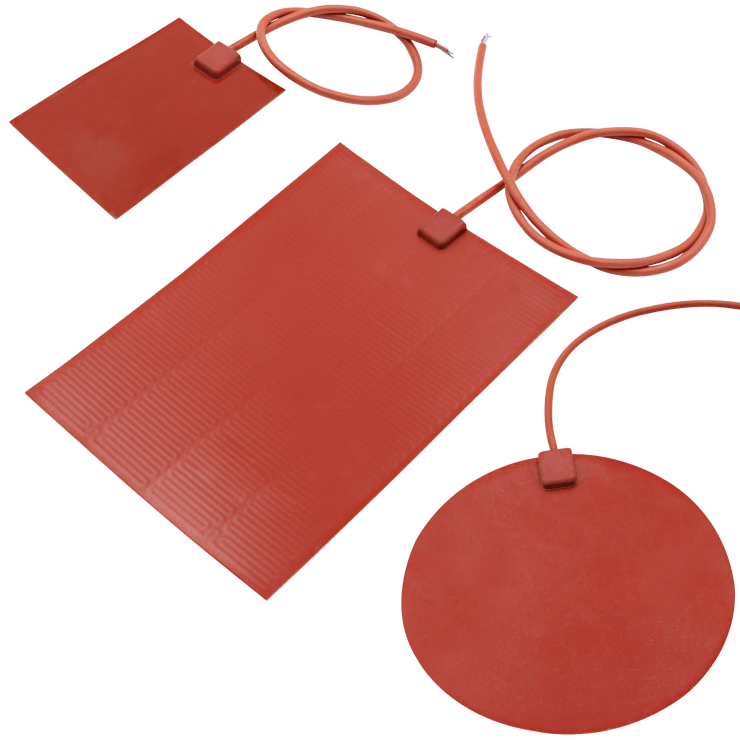
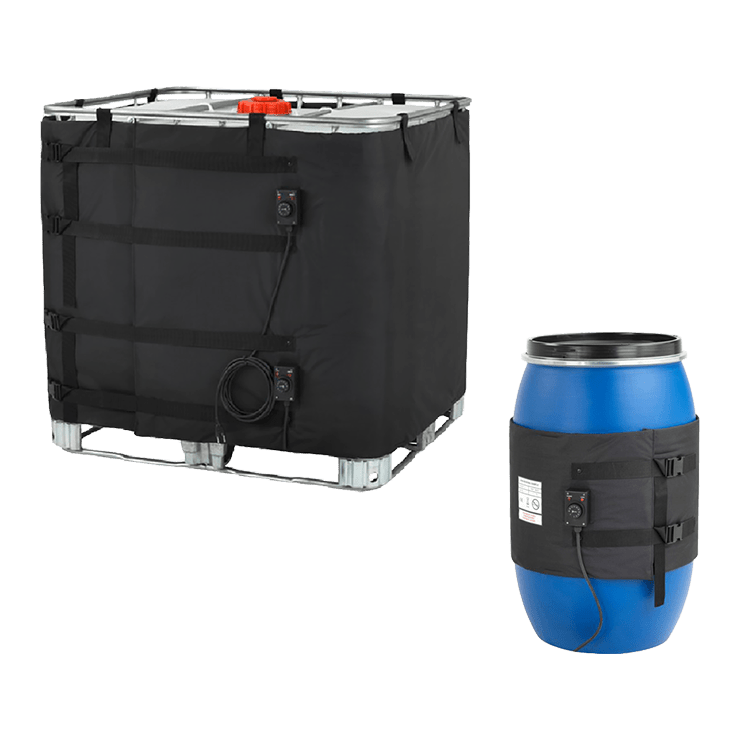
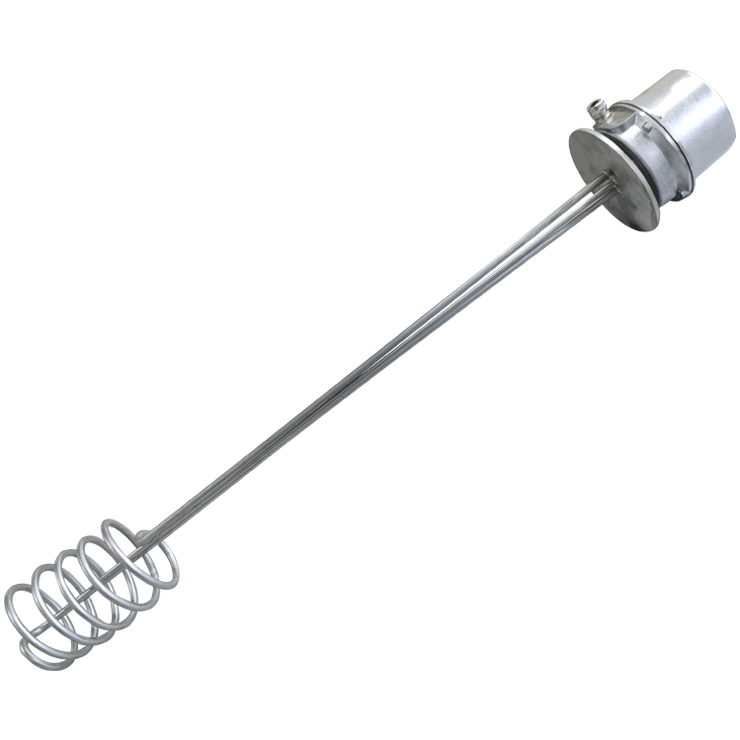
Electrically heated silicone fabrics are designed to raise or maintain the temperature of liquids and viscous products contained in vats, tanks or pipes, as well as to heat solid materials up to a temperature of250°C.
They are widely used in various industrial sectors (food processing, industrial processes, pharmaceuticals, etc.) to maintain fluid temperatures, prevent condensation in electrical enclosures, or heat solid parts such as press platens or molds.
Heat transfer takes place mainly by conduction, whether when the silicone heating fabric is pressed against a metal part, or when heating a liquid or viscous product through the walls of a container or pipe.
When heating air in an enclosure, heat transfer is by natural convection directly between the fabric and the air, or via a heat exchanger on which the heating element is mounted, thus optimizing heat transfer.
Heated silicone fabrics are lightweight, flexible and can be preformed to fit specific shapes such as cylinders or cones. They are resistant to moisture, chemicals, UV rays and aggressive environments. What's more, they offer excellent electrical insulation.
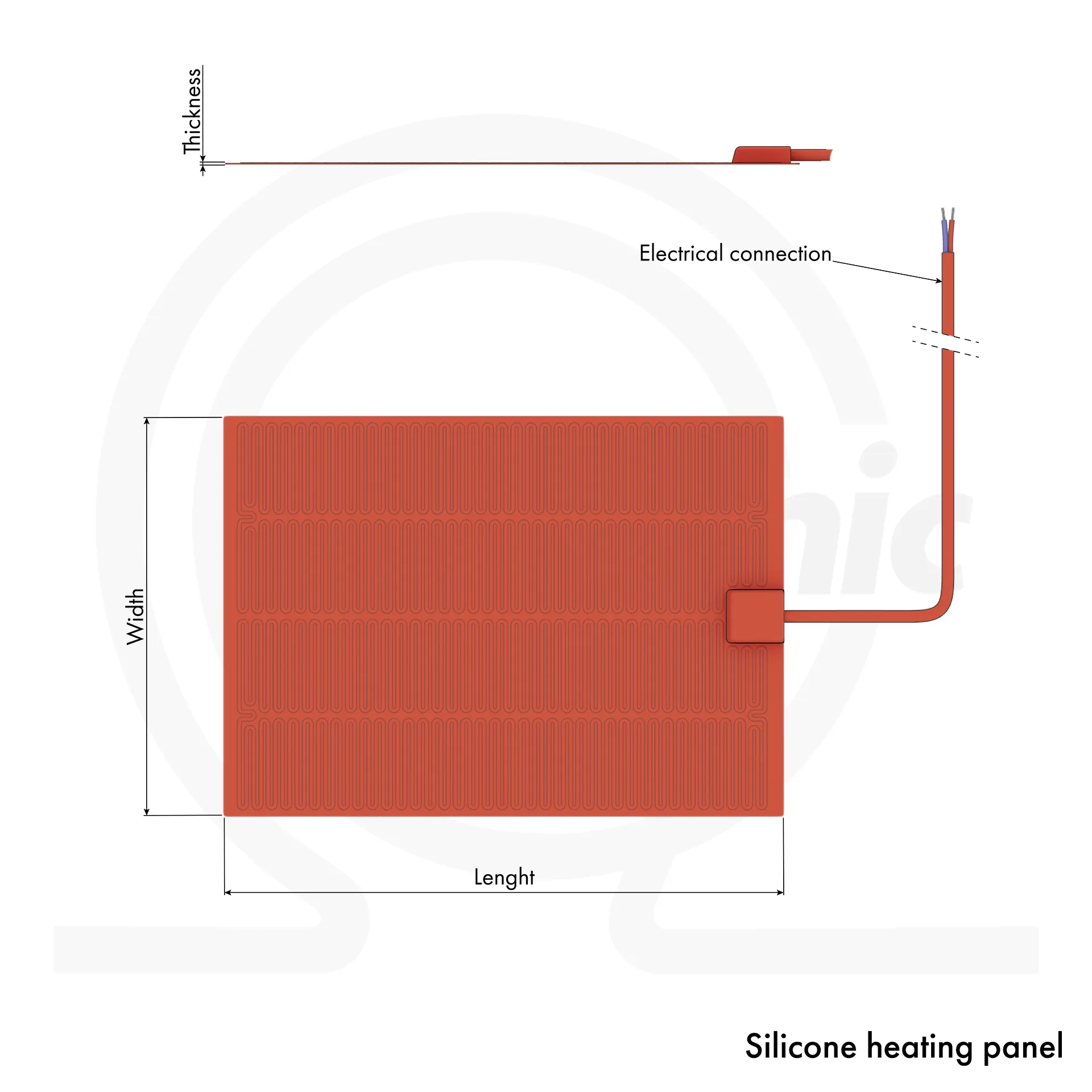
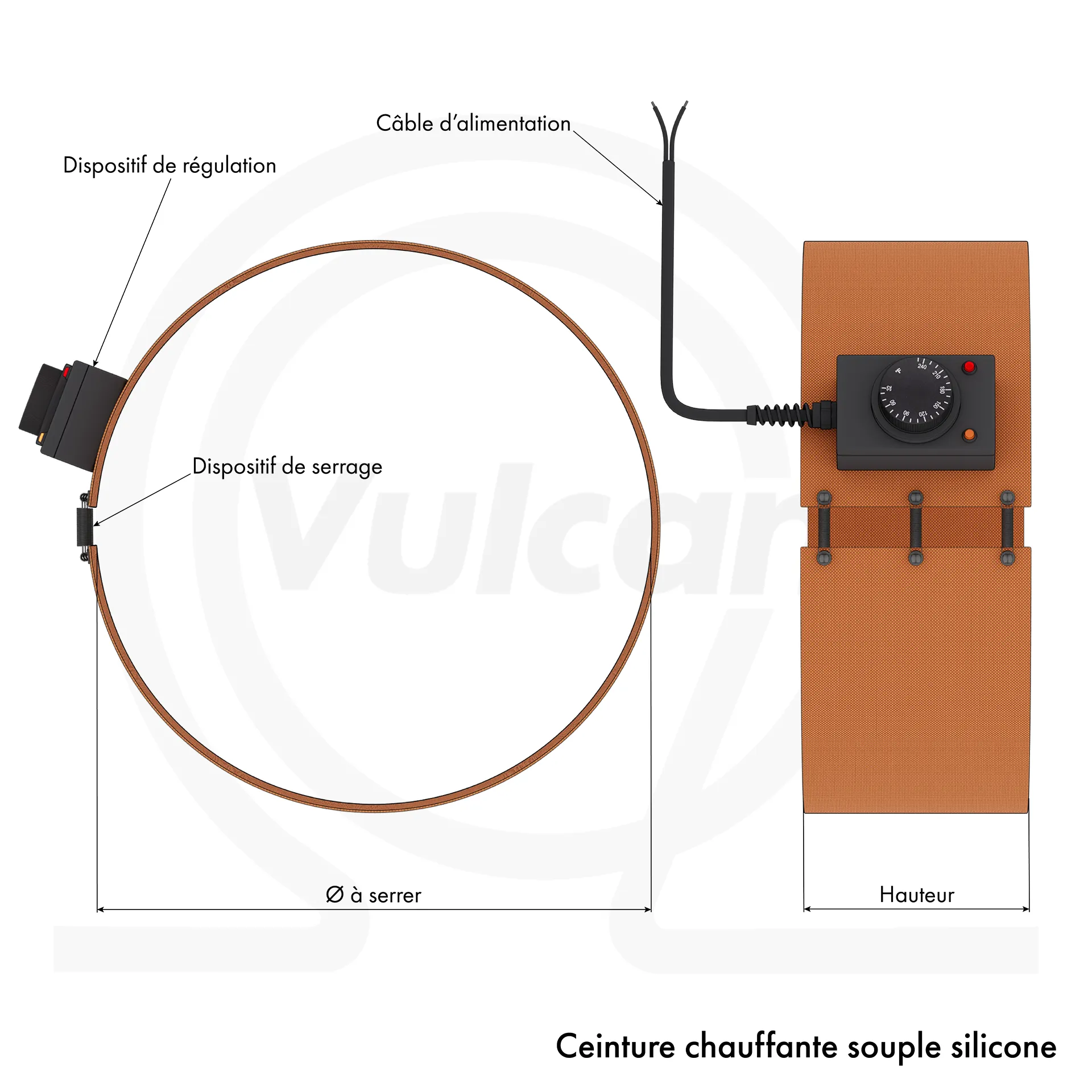
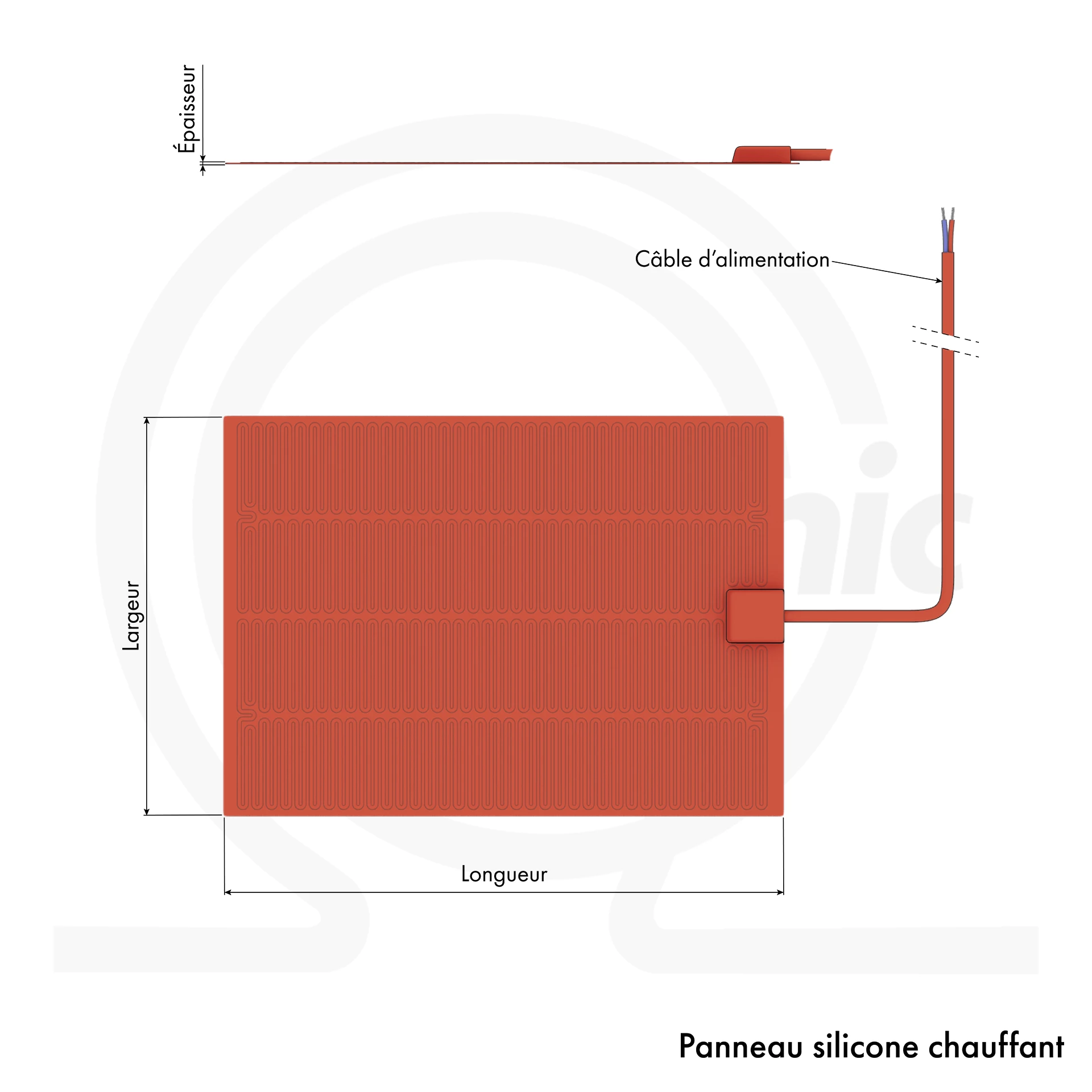
They consist of one or more resistive wires embedded between 2 layers of silicone-coated braided fabric. They can be pre-formed or cut to size to suit the support to which they will be attached.
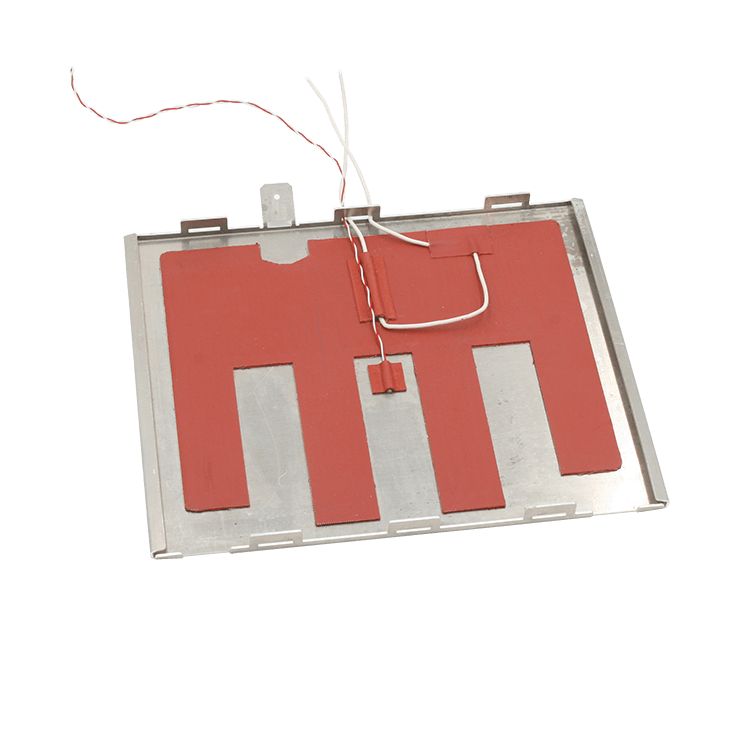
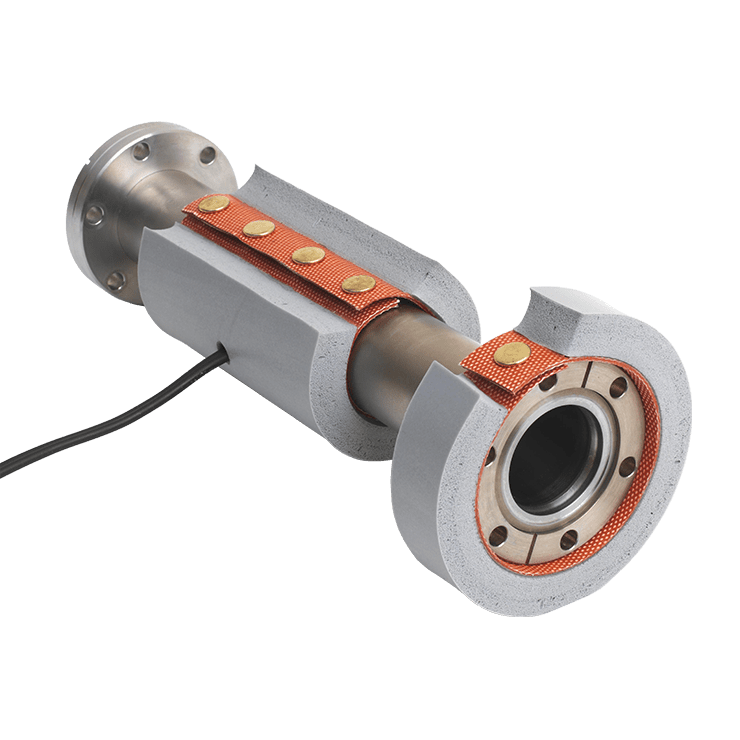
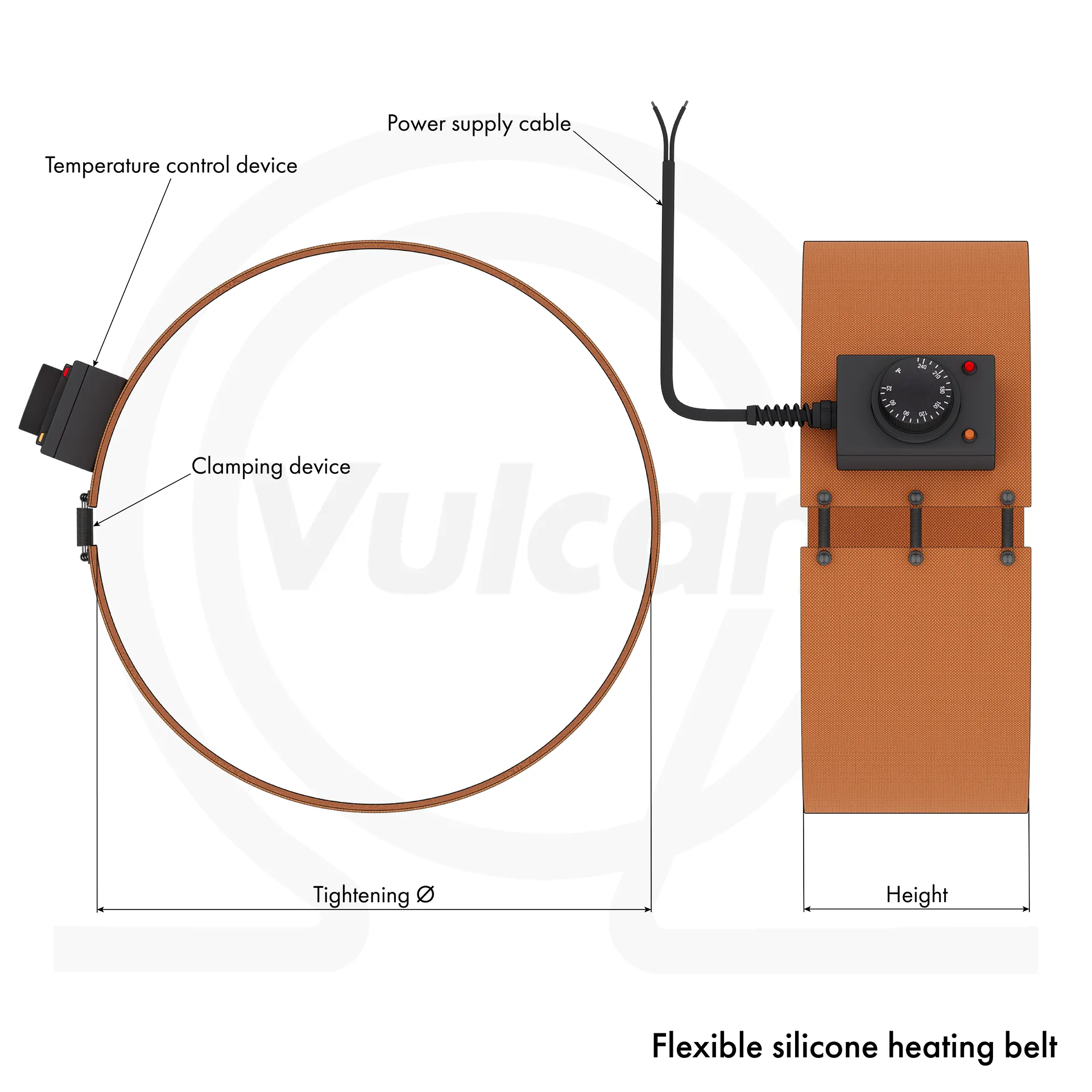
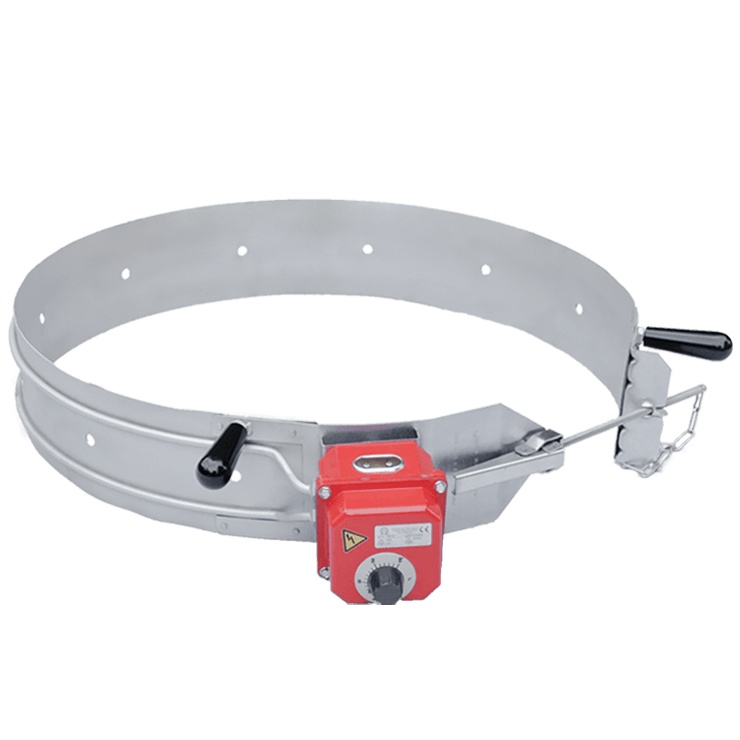
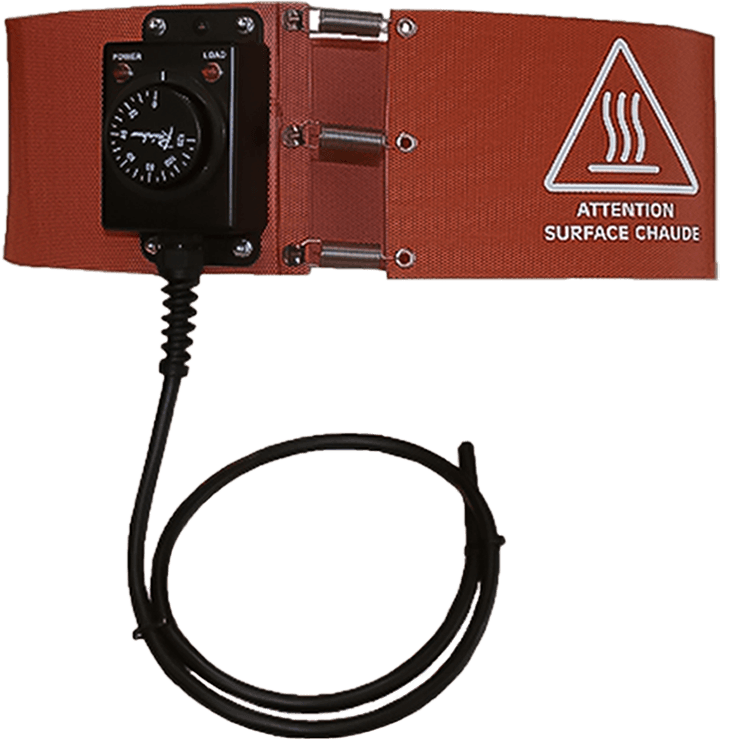
Heated fabrics can be fitted with various functional accessories: temperature sensor, thermal limiter, adhesive face for permanent attachment, insulating foam coating, as well as various removable fastening systems such as Velcro or magnetic fasteners, hooks with springs or straps.
- Single-phase (DC or AC) or three-phase voltage.
- Fabric thickness from 0.8 mm to 3 mm.
- Standard IP64 tightness, IP65 for special designs.
- Maximum dimensions: 940 x 3000 mm