Electric heating and cooling solutions for industry

Home > Products > Standard products > Circulating fluid heaters

Circulating fluid heaters

Definition and general information

rech4corps (web)
nitrogen air circulation heater page
atex heater (web)
compatherm 1 body insulated heater (web)
low-flow heater (web)
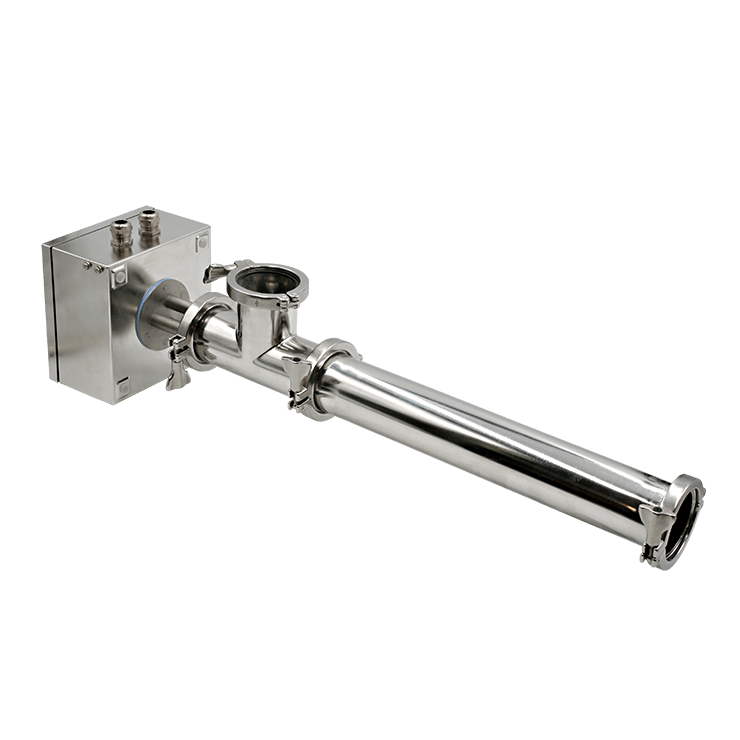
pharma heater view 1 (web)
rech4corps (web)
nitrogen air circulation heater page
atex heater (web)
compatherm 1 body insulated heater (web)
low-flow heater (web)
pharma heater view 1 (web)

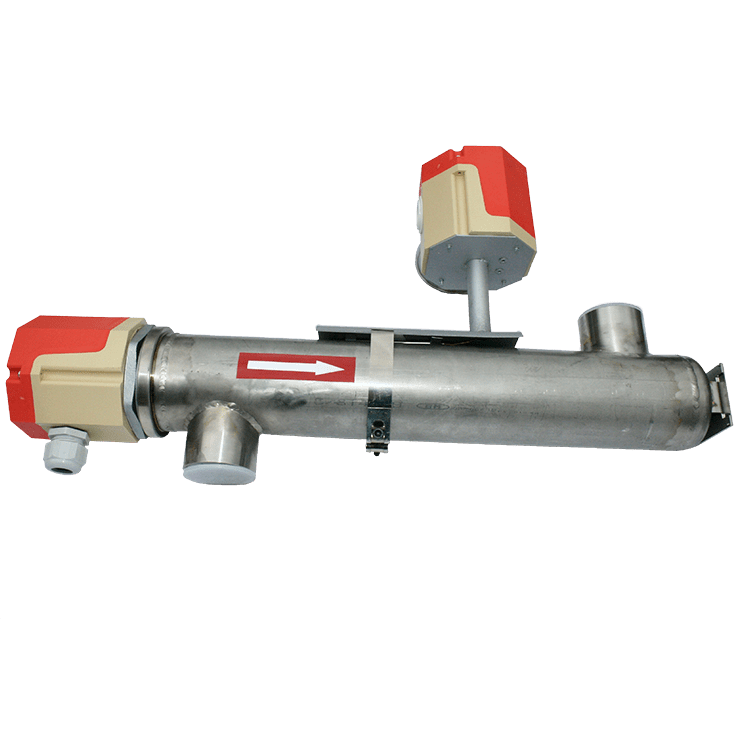
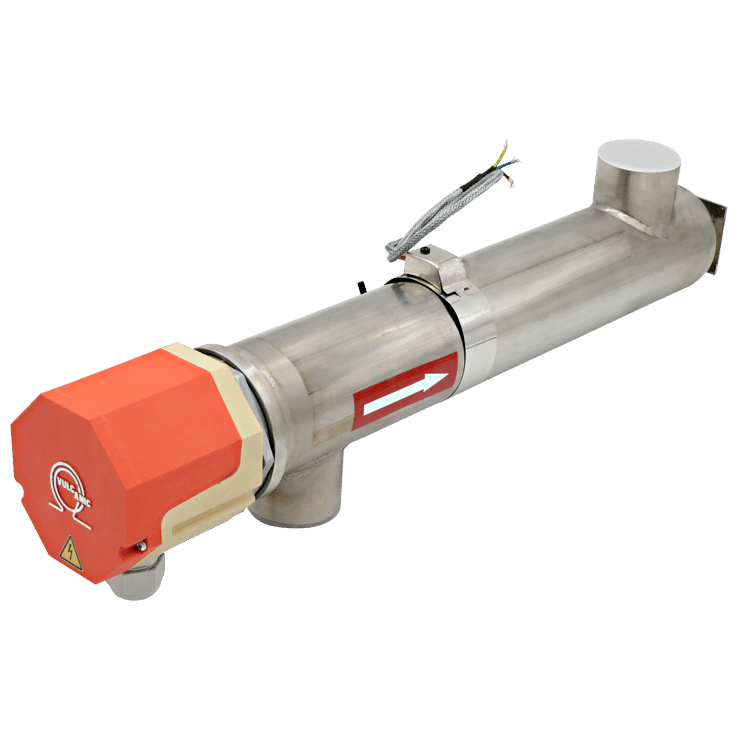
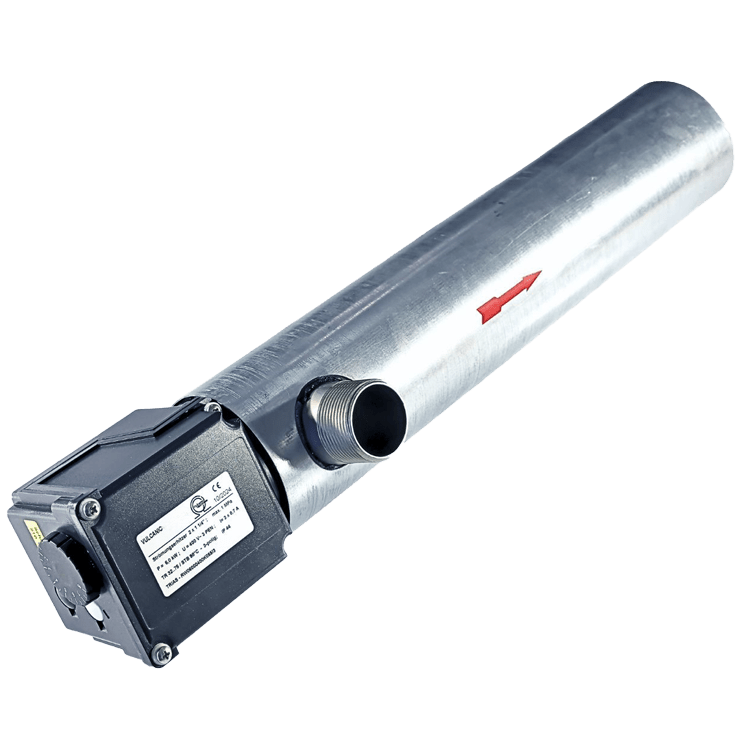
Electric inline heaters are designed to heat fluids in circulation under pressure, whether liquids (water, oil, aqueous solutions, etc.) or gases (air, nitrogen, etc.). They are integrated directly into a process line, where the fluid circulates through a boiler containing shielded electric heating elements.

In an open circuit, the fluid is heated in a single pass through the device. In a closed circuit (loop), the fluid is gradually brought to the desired temperature through several successive passes through the heater.

In-line heaters are widely used in various industrial sectors such as oil and gas, food processing, and pharmaceuticals. They can be used in a wide range of applications, such as fluidizing hydrocarbons to facilitate pumping or transfer, heating decontamination solutions in pharmaceutical facilities, and implementing drying processes using heated air or gas.

The shielded electric heating elements, integrated into the heater body, transfer heat directly to the fluid by forced convection, ensuring efficient and uniform heat transfer.

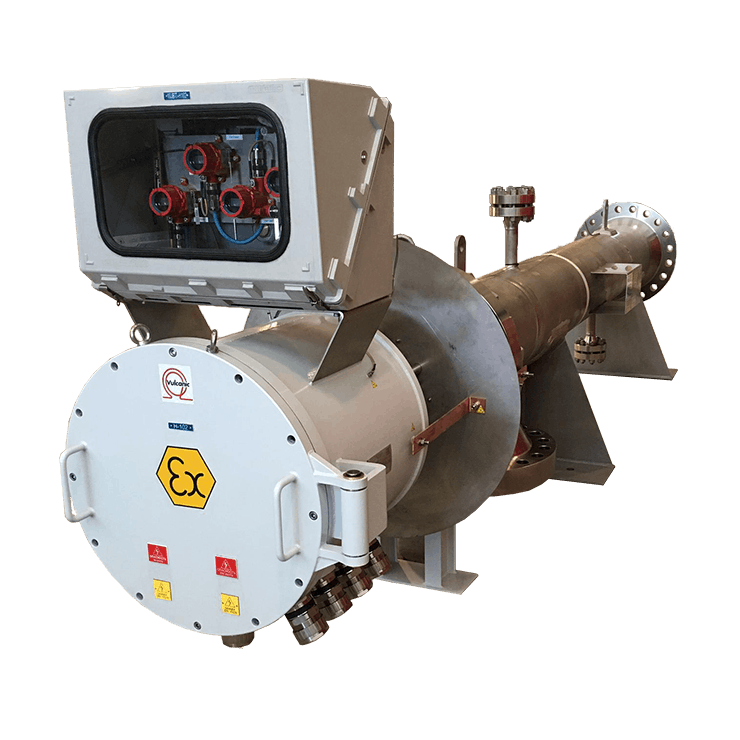
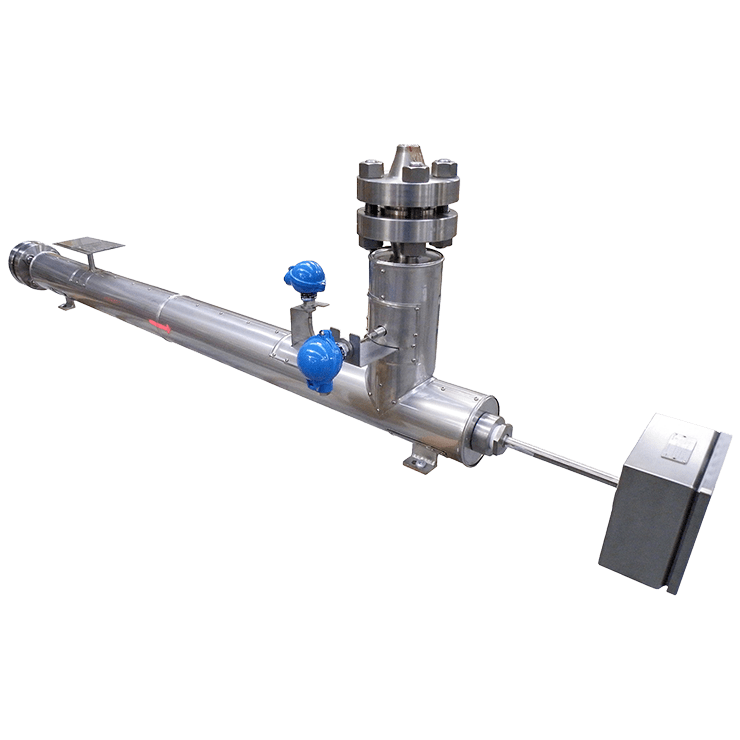
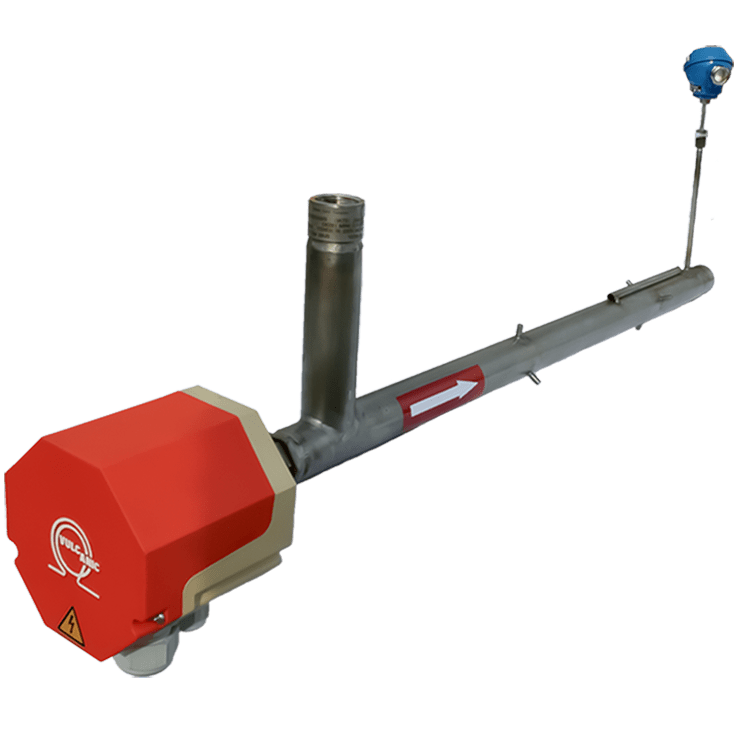
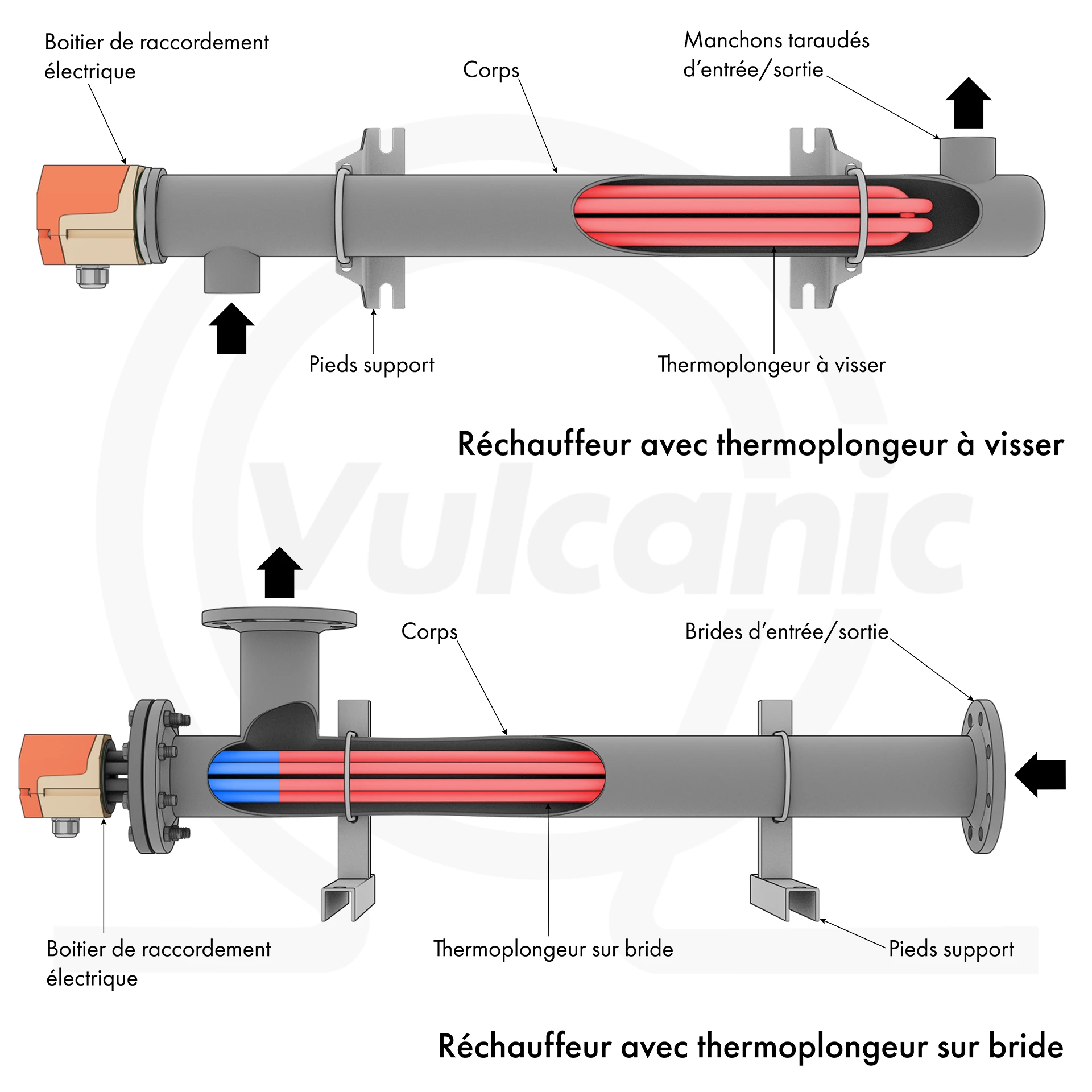
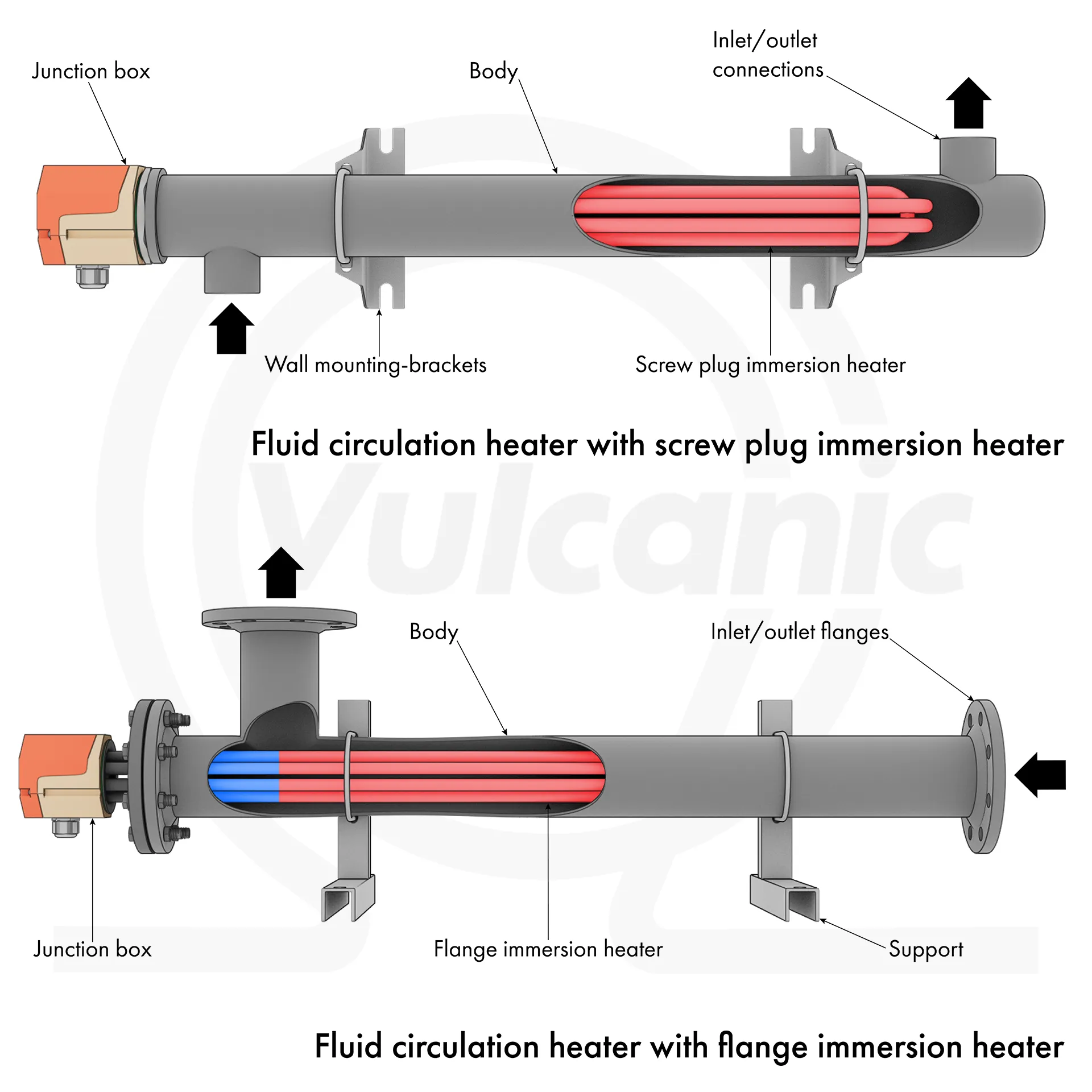
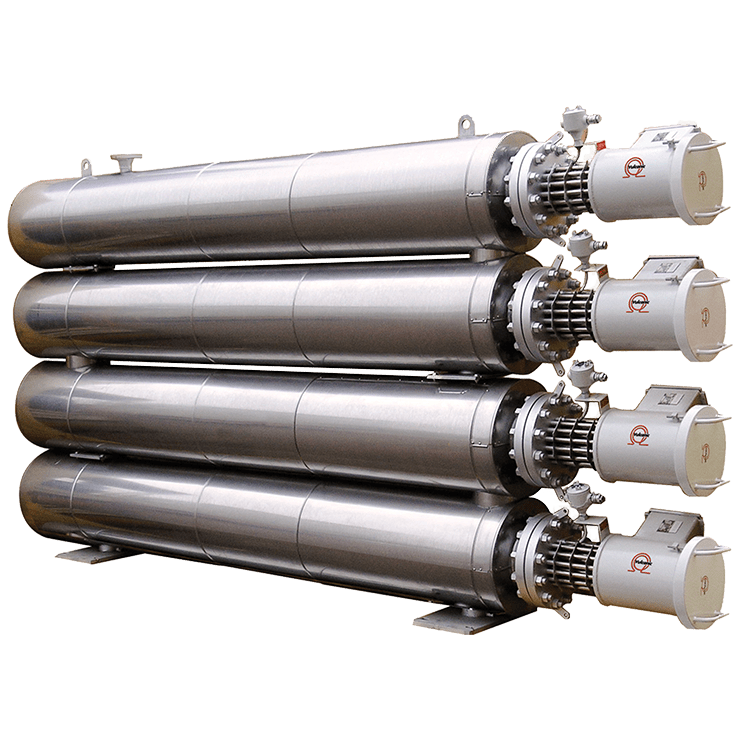
An inline heater consists of one or more steel or stainless steel bodies with inlet and outlet ports made from threaded sleeves or standard flanges. It incorporates one or more immersion heaters that can be screwed in or flanged on, depending on the configuration.

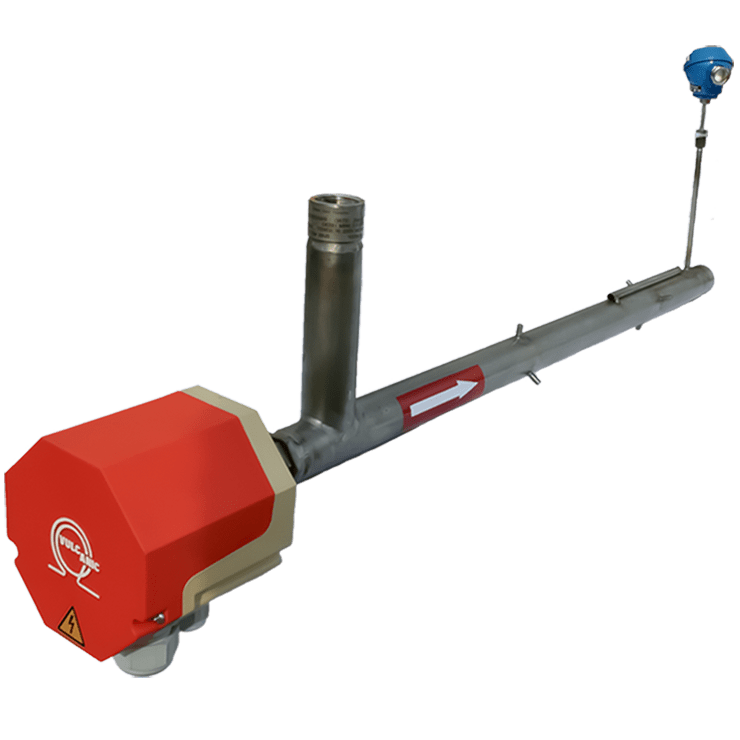
The device can be equipped with safety and control devices (adjustable thermostat, Pt100 sensor, or thermocouple). It can also be insulated using thermal insulation and an external protective jacket to limit heat loss and protect operators.

In-line heaters can be designed according to various construction codes (ASME, CODAP, etc.) and in compliance with the European Pressure Equipment Directive (PED 2014/68/EU).

Robust and reliable, they are suitable for demanding industrial environments such as nuclear, offshore, or potentially explosive atmospheres (gas), with ATEX and IECEx certified equipment.

  • Unit power: from 500 W to 10 MW
  • Supply voltage: single-phase (230 V) or three-phase (400 V, 690 V)
  • Maximum design temperature: 565 °C for liquids and 820 °C for gases
  • Maximum design pressure: up to 365 bar
  • Applicable standards for bodies: EN, ASME, ASME BPE, SMS, etc.
  • Body diameters: from DN 20 to DN 1000 (with inch equivalents)
  • Several shades of materials for bodies and armored resistors, depending on the nature of the fluid and the constraints of the process

 

Applications

In-line heaters are used in many applications. Here are some concrete examples:

Food industry

In the food industry, sensitive products such as chocolate and honey are stored in double-walled tanks. Water circulates in a closed loop in the outer wall, continuously heated by an electric heater to ensure a stable and consistent temperature, which is essential for the final quality.

Chemistry and pharmaceuticals

In the pharmaceutical industry, inline heaters heat CIP cleaning solutions to ensure complete disinfection and decontamination of tanks, pipes, and equipment.

Energy sector

In solar thermal power plants, in-line heaters are used to heat or maintain the temperature of molten salt, which is used as an energy storage medium. This salt, heated to high temperatures (often > 500°C), stores the sun's heat and releases it to generate electricity, even in the absence of sunlight.

Industrial processes

Electric inline air heaters are used in industrial drying processes to provide a controlled flow of hot air. This heated air is blown directly onto the materials to be dried in order to accelerate moisture evaporation.

Technical data

Removable immersion heaters consist of :

  • The heater body is the casing in which the fluid to be heated circulates. It incorporates the electrical resistors and the inlet and outlet connections, and ensures resistance to pressure and temperature. The heater may consist of several bodies, made of steel or stainless steel, mounted in series.
  • Heating is provided by one or more shielded electric heating elements, usually attached to a threaded cap or flange. This assembly, called an immersion heater, is inserted directly into the body of the heater.
  • Depending on the size and weight of the heater, it can be equipped with support feet for wall mounting or skid mounting.
  • As an option, the inline heater can be equipped with a safety device on the body (thermostat, Pt100 probe, or thermocouple), as well as limiting or regulating devices installed on the inlet and outlet connections.
  • A heat shield, consisting of insulation and an outer protective jacket, can be added to the heater to reduce heat loss, protect operators, and maintain fluid temperature.

Further information

  • Vulcanic offers ATEX and IECEx certified equipment for heating in explosive atmospheres (gas).
  • The heaters can be designed in accordance with manufacturer codes (CODAP, ASME, etc.) and comply with the European Pressure Equipment Directive (PED 2014/68/EU).
  • In addition to the wide range of finished products available in our online catalog, Vulcanic can design custom equipment, manufactured on demand to meet your needs (power, voltage, material, safety and control devices, etc.).

Recommendations

Precautions for use

Under no circumstances should immersion heaters be switched on without ensuring that the minimum calculated flow rate is maintained (the installation of a flow controller is strongly recommended; a degasser is often essential for liquids).

Ensure that the heater bodies are completely full (in the case of liquid heating), having thoroughly purged the installation.

Installation and connection

The heater must be controlled by a regulation system that is independent of the safety system, and the fluid outlet temperature must be limited to the maximum prescribed temperature.

The flow rate must not fall below the minimum prescribed value when the heater is dissipating its rated power.

Please refer to the instruction manual for all recommendations relating to the equipment.

Fill out the form below to apply for the position of : Circulating Fluid Heaters

* All fields must be completed

Fill in the form below to submityour unsolicited application

* All fields must be completed