Reinventing thermal processing: how electric heating strengthens reliability and energy efficiency across F&B operations.
In the food and beverage industry, heat plays a central role in safeguarding product integrity, safety and operational performance. Thermal processes must work exactly as expected, every time, because the smallest deviation can influence quality, efficiency and compliance.
Even in highly advanced facilities, many thermal processes are still shaped by long‑standing methods designed for a different set of production pressures. Expectations today are significantly different: lower emissions, higher reliability, tighter temperature tolerances, broader product variation and greater traceability. Electrification provides a practical way to meet these demands, offering new levels of control, efficiency and reliability without disrupting proven processes.
This shift is prompting many manufacturers to reconsider how heat should operate in a modern F&B environment. Increasingly, electric heat is becoming a foundation for this change, not only because it is cleaner, but because it delivers the precise, robust and adaptable performance required of contemporary production.
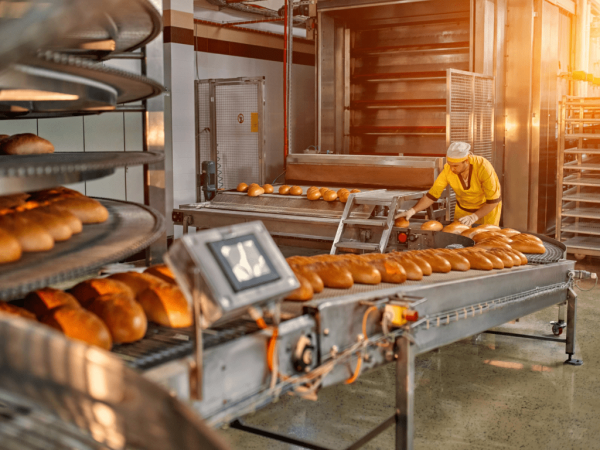
Why traditional heating systems make it harder to meet today’s requirements
Steam networks, thermal oil loops and ageing boilers can introduce challenges such as temperature drift, slow response times, hot spots, pressure fluctuations, leaks and frequent maintenance interruptions. Their physical scale and rigid configurations can also make adaptation difficult when production lines evolve or new recipes are introduced.
For a sector that requires both stability and agility, these limitations can constrain potential.
Electric heating offers a fundamentally different approach, one that is simpler, more controllable and engineered for precision from the start.
A cleaner, more efficient heat pathway
Electric heating eliminates combustion losses and reduces the energy wasted in long distribution networks. Heat is generated exactly where needed, using compact systems designed to minimise loss and maximise control.
For manufacturers progressing toward ambitious decarbonisation goals, this provides a tangible pathway: direct reductions in Scope 1 emissions today, combined with increasing access to cleaner electricity sources. But the wider value extends beyond carbon reduction. Efficiency is achieved through precision: applying exactly the right amount of heat, exactly when the process requires it.
Reliability built into every step
Modern electric heating technologies offer impressive stability. With fewer moving parts and no combustion elements, the likelihood of unexpected failures falls significantly. Because temperature is regulated directly at the point of heat generation, process variability is reduced and unplanned downtime becomes less frequent.
Reliability directly supports product safety, quality and yield. When thermal systems perform consistently, production remains stable, teams can operate with confidence and disruption is minimised. Robust construction, long service life and industry‑specific certifications further reinforce this dependability, particularly in hygiene‑critical environments where equipment must withstand rigorous standards day after day.
Precision that safeguards quality
Many F&B products now rely on narrow temperature windows to protect taste, texture, nutrition and microbial safety and electric heating consistently enables this accuracy, with precise regulation and fast response times.
This level of control supports consistent sterilisation and pasteurisation, stable heating for sensitive ingredients, predictable batch quality, better energy management and reduced waste or rework. As regulatory expectations rise and formulations become more complex, precision is becoming essential to secure both efficiency and product integrity.
FAQ: Navigating electric heating in F&B operations
Yes. Modern electric systems can achieve high temperatures with stable regulation and uniform heat distribution. Their design also supports applications that require strict hygiene compliance or rapid thermal response.
Not necessarily. In many cases, electric heating can be integrated alongside existing systems or targeted at critical areas where precision, efficiency or control will deliver the greatest benefit.
Electric systems are inherently flexible. Their compact form and configurable control allow them to adapt to varying recipes, viscosities, flow rates and production volumes, this supports the agility required as SKU ranges expand.
Designed to adapt: flexible, compact and configurable
One of the most significant advantages of electric heating is its scalability and adaptability. Rather than forcing plants to design around large, fixed assets, electric systems can be configured to suit specific processes and production constraints.
Compact footprints support space‑restricted facilities. Modular architectures adapt to new products or increased demand, and customisable heating profiles match different recipes, viscosities or flow rates. Scalable designs make expansion possible without major infrastructure changes. As product portfolios grow and changeovers become more frequent, this flexibility helps maintain both efficiency and safety.
Cost‑effective solutions for evolving production environments
As cost pressures intensify across the food and beverage sector, manufacturers are increasingly looking for thermal systems that can deliver dependable performance without adding complexity or unnecessary expense. Electric heating supports this shift by offering solutions that adapt to a wide range of budgets, layouts and installation constraints.
With energy prices remaining volatile, particularly for gas, many producers are consolidating their footprint, operating within more compact facilities or designing highly focused process areas. In these environments, large‑scale steam and gas systems can become difficult to justify, both financially and spatially.
Electric heaters provide a practical alternative: compact in design, simple to install, scalable in power and associated with lower maintenance requirements over their lifetime.
At the same time, the growth of local, agile and smaller‑scale manufacturers is reshaping industry needs. These businesses often require affordable, flexible solutions that fit within tight spaces while meeting evolving regulatory expectations. As gas‑based systems become subject to greater compliance constraints, electric heat offers a reliable and future‑ready option that aligns with both operational demands and long‑term sustainability goals.
Ultimately, electric process heating is more than a technical upgrade, it becomes a strategic enabler. By combining efficiency, flexibility and regulatory resilience, it supports production models that are leaner, more adaptive and better positioned for continued growth.
Improving efficiency across the whole production chain
Electric heating can be applied at every stage of an F&B process, from indirect heating of tanks and jackets to hot water generation, CO₂ vaporisation for refrigeration, and high‑precision thermal control for sterilisation.
Across these applications, plants often see reduced energy loss, more consistent temperatures, better line stability, lower lifetime operating costs, simpler compliance with audits and clearer process data for optimisation. Coupled with digital monitoring and advanced control, electric systems enable operators to run processes more efficiently without added complexity.
Setting a new standard for F&B thermal processing
Reinventing thermal processing is not simply about switching heat sources. It is about rethinking how heat supports the wider goals of modern food and beverage production. Electrified heating provides greater control, stability and efficiency, helping heat deliver more value across the operation.
Reliability improves through robust designs and fewer failure points. Precision strengthens safety and product quality. Flexibility ensures systems can adapt as production evolves. And importantly, electrification supports long‑term decarbonisation by reducing direct emissions today and preparing plants for a cleaner energy future.
When paired with the right expertise, certified systems and a focus on real application needs, electrification provides a clear and practical route toward safer, cleaner and more efficient F&B operations.
Ready to strengthen reliability, precision and efficiency across your thermal processes? Speak with our specialists to explore where electric heating can deliver the greatest impact in your operation.